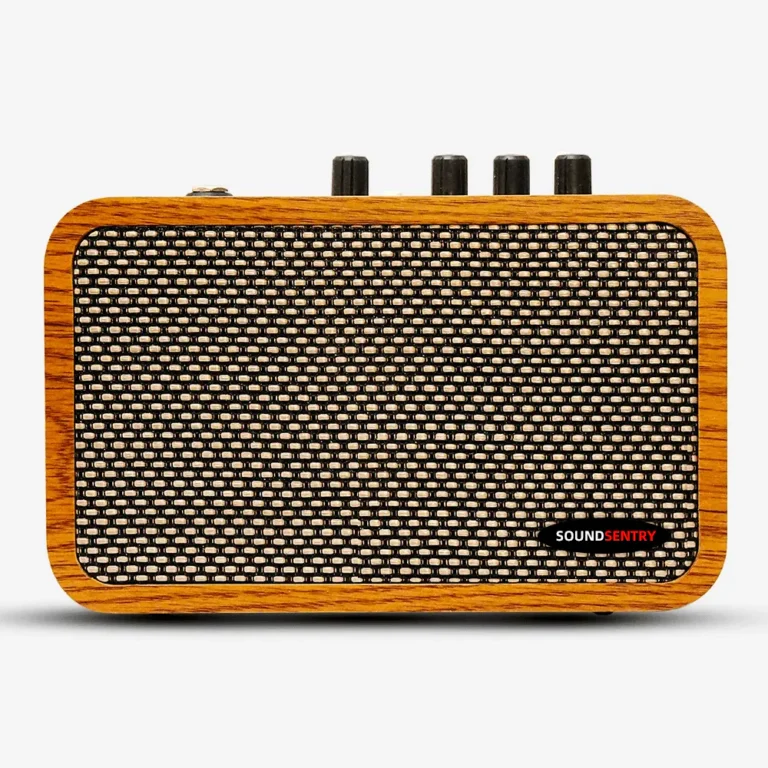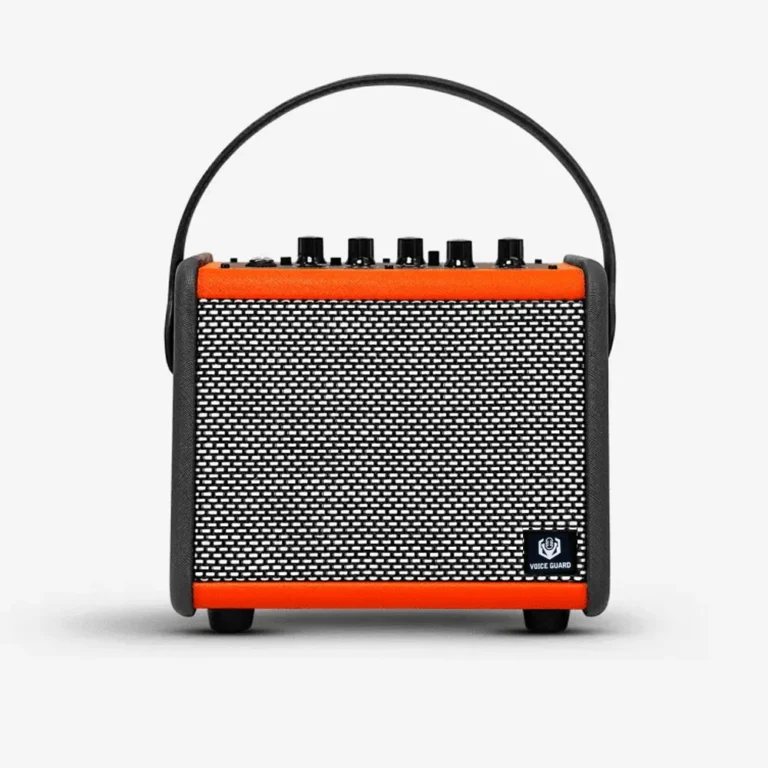
Portable Guitar Amplifier OEM Design Guide for Music Brands
A practical OEM guide for brands and importers planning portable guitar amplifiers, covering power, speaker size, battery, Bluetooth, effects, QC and sample approval.
OEM Buyer Summary
A buyer-focused guide to defining a portable guitar amplifier for practice, retail bundles and private-label product lines.
Portable Guitar Amplifier OEM Design Guide: What Buyers Should Decide Before Sampling
Portable guitar amplifiers look simple from the outside. A small cabinet, a speaker, a few knobs, maybe Bluetooth and a rechargeable battery. For a brand owner or importer, though, the product is not simple at all. A portable amp has to sound convincing at low volume, survive daily handling, run quietly on battery power, and still hit a retail price that makes sense.
This is why the best OEM projects start before the first sample is built. If the buyer only says “we need a 15W portable guitar amp,” the factory has to guess too much. A better brief explains who the amp is for, where it will be used, what sound character it should have, and which features are required for the target market.
Below is a practical guide for music brands, distributors, and retailers planning a portable guitar amplifier line.
Start With the Use Case, Not the Wattage
Many buyers begin with power: 10W, 15W, 20W, or 30W. Power matters, but it should not be the first decision. A 15W practice amp for bedroom players is different from a 15W busking amp, and both are different from a compact demo amp for retail bundles.
For OEM planning, define the use case first:
– Bedroom practice for beginners
– Travel practice for intermediate players
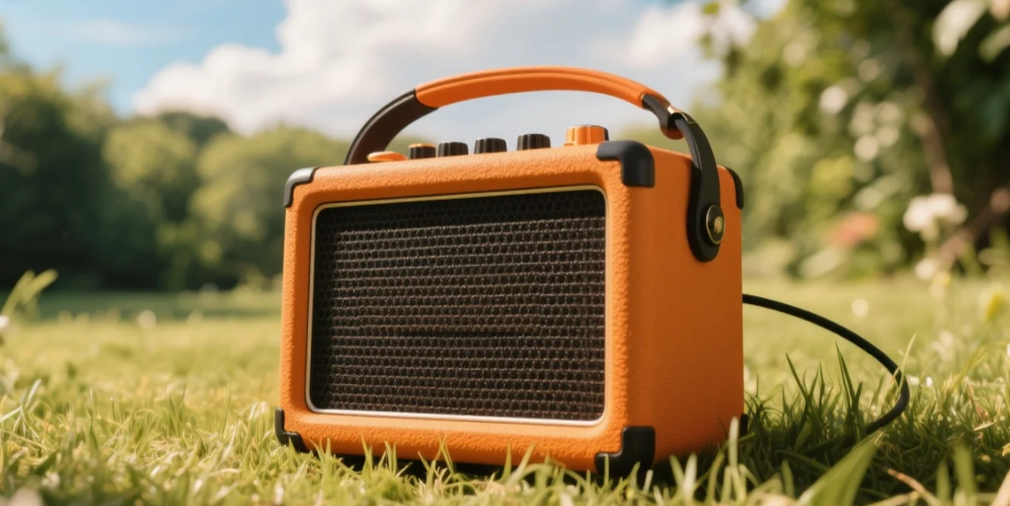
– Street performance or small acoustic sets
– Retail starter kits
– Online marketplace entry-level products
– Private label products for music schools
Once the use case is clear, the rest of the specification becomes easier. A beginner practice amp may need clean/distortion switching, headphone output, Bluetooth backing track playback, and simple controls. A busking amp may need longer battery life, microphone input, stronger cabinet protection, and louder clean headroom.
Speaker Size Shapes the Product More Than Buyers Expect
Speaker size affects tone, cabinet size, weight, cost, and customer expectations. For small portable guitar amps, common speaker sizes include 3 inch, 4 inch, 5 inch, 6.5 inch, and 8 inch.
Small speakers keep the unit light and affordable, but they can sound thin if the circuit and cabinet are not tuned properly. Larger speakers give more low-mid body, but they increase shipping volume and retail shelf space.
For many portable electric guitar amps, a 4 inch to 6.5 inch speaker is a practical range. It keeps the product compact while still allowing a useful guitar voice. If the product needs to handle backing tracks or acoustic guitar, the speaker choice becomes more important because the amp must reproduce a wider frequency range.
Buyers should ask the supplier for:
– Speaker impedance and rated power
– Frequency response range
– Cabinet material and internal volume
– Audio sample or video demo from the actual sample
– Distortion behavior at higher volume
Do not judge the amp only from the control panel design. In a portable guitar amplifier, the speaker and cabinet are often the difference between “toy-like” and “sellable.”
Clean, Drive, and Effects: Keep the Control Layout Honest
Entry-level buyers like feature lists, but too many features can make a small amp harder to use. A good portable amp should feel direct. The player should understand the control panel in a few seconds.
Common control options include:
– Volume
– Gain
– Tone or EQ
– Clean/distortion switch
– Reverb
– Chorus
– Delay
– Bluetooth volume
– Headphone/recording output
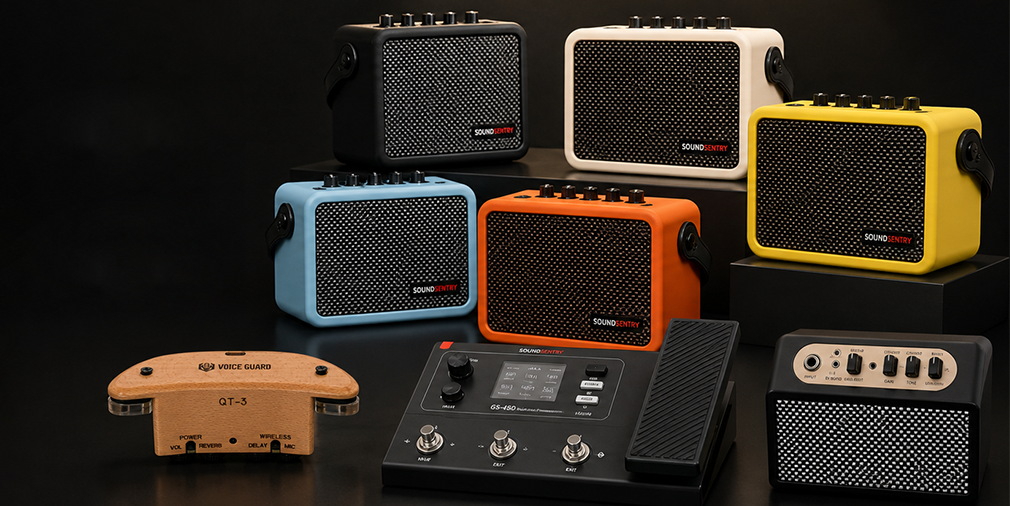
For OEM buyers, the question is not “how many knobs can we add?” The better question is “which controls will the customer actually use every day?” For beginner products, simple is usually better. For a higher-positioned practice amp, built-in reverb, chorus, and delay can add real value if the effects are musical and not noisy.
When reviewing samples, test each control at low, middle, and high settings. Listen for scratchy pots, sudden volume jumps, hiss, and effect noise. These issues are easy to miss during a quick factory video but very obvious to end users.
Battery Design Is a Sales Feature and a Quality Risk
A rechargeable battery can make a portable amp more attractive, especially for online retail. It also adds responsibility. Battery life, charging safety, protection circuit quality, and real-world runtime all need to be checked.
Useful questions for the supplier include:
– What is the battery capacity?
– What is the tested runtime at normal volume?
– Does runtime change significantly with Bluetooth playback?
– Is USB-C charging supported?
– Is overcharge and over-discharge protection included?
– Are battery documents available for shipping?
For a beginner practice amp, buyers should avoid unrealistic claims. If the supplier says “8 hours,” ask under what test condition. Was it clean channel at low volume? Was Bluetooth off? Was the speaker playing continuously? Realistic battery claims reduce after-sales disputes.
Bluetooth Should Be Treated as a Practice Feature
Bluetooth is now expected in many compact guitar amps. In most portable guitar amplifier designs, Bluetooth is used for playing backing tracks from a phone, not for sending the live guitar signal wirelessly. That distinction should be clear in product copy.
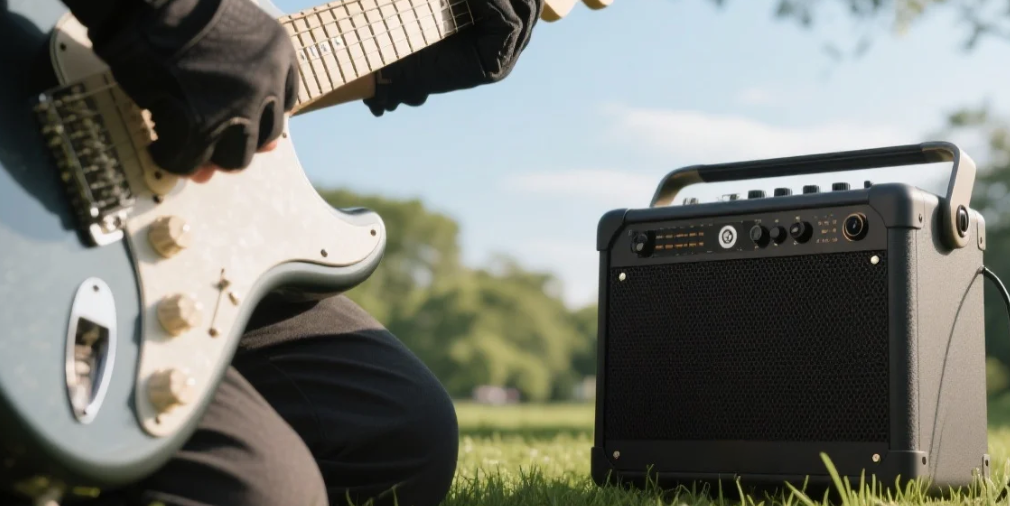
For OEM projects, Bluetooth quality should be tested in ordinary use:
– Pairing speed
– Reconnection behavior
– Background noise
– Volume balance between guitar and backing track
– Stability at a normal room distance
– Interference in a typical indoor environment
If the product is sold to beginners, Bluetooth backing track playback can be a strong selling point. It helps players practice songs without extra equipment. For wholesalers and retailers, this feature also makes the product easier to explain in listings and sales materials.
OEM Branding and Color Options
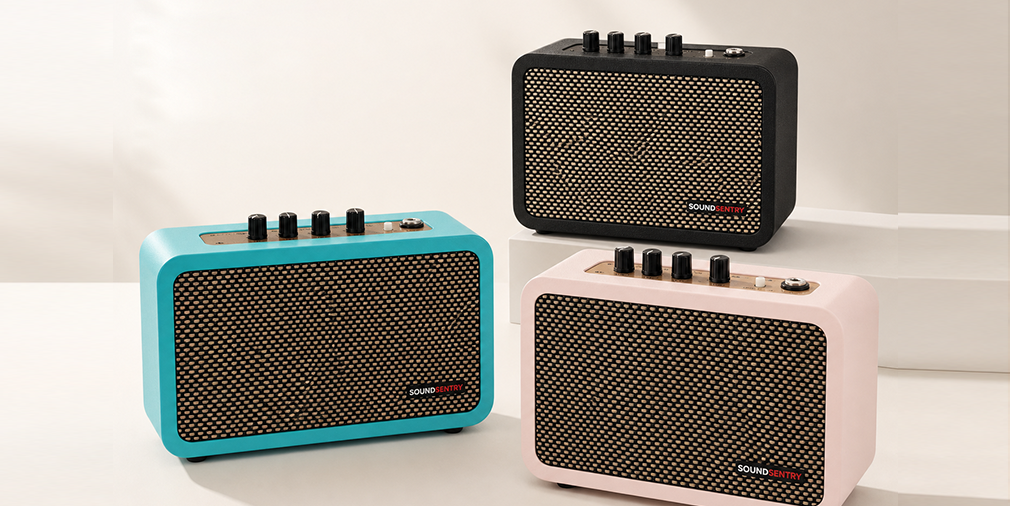
Private label buyers should decide early whether the product will be sold as a low-cost entry model, a stylish practice amp, or a more professional compact amp. This affects color, logo placement, knob style, packaging, and included accessories.
Branding options may include:
– Front grille logo
– Control panel printing
– Custom color cabinet
– Custom carton artwork
– User manual with brand identity
– Accessory bundle
– Barcode and retail label support
Color options can help a product stand out, but too many colors increase inventory pressure. For a first order, two or three colors are usually safer than five or six.
Sample Approval Checklist
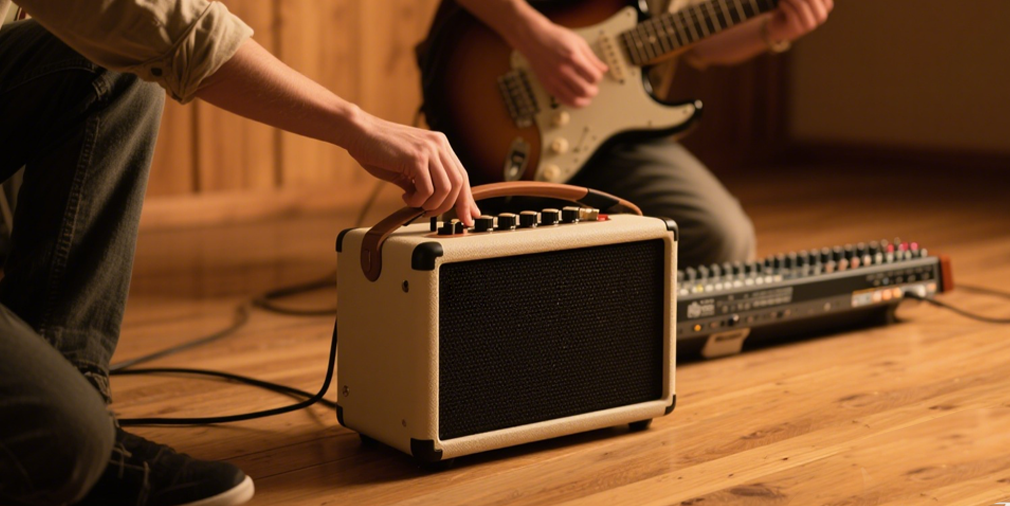
Before confirming mass production, test the sample like a customer would:
– Clean tone at bedroom volume
– Distortion tone at moderate volume
– Noise level with no guitar playing
– Headphone output
– Bluetooth pairing and playback
– Battery charging and runtime
– Knob feel and switch feel
– Cabinet vibration at high volume
– Packaging protection
– User manual accuracy
If the amp will be sold online, also take product photos and video during sample approval. This helps confirm whether the product looks good on screen, not just on a desk.
Final Thought
A good portable guitar amplifier is not just a small amp. It is a balanced product: sound, size, battery, controls, price, packaging, and reliability all have to work together. For OEM and ODM buyers, the most successful projects start with a clear specification and honest sample testing.
Sound Sentry Music supports OEM/ODM guitar amplifier projects for brands, wholesalers, and retailers. If you are planning a portable guitar amp line, prepare your target market, desired features, and price range before requesting a sample. A clearer brief usually leads to a better product and a faster launch.
FAQ
What wattage is best for a portable guitar amplifier?
For bedroom practice and beginner kits, 10W to 15W is often enough. For louder practice or small outdoor use, buyers may consider higher power, but speaker size and cabinet tuning matter as much as wattage.
Should a portable guitar amp include Bluetooth?
Yes, if the target customer practices with backing tracks. Bluetooth is useful for music playback, but product descriptions should not imply zero-latency wireless guitar transmission unless the design truly supports it.
What should buyers test before mass production?
Test tone, noise, battery life, Bluetooth stability, knob feel, cabinet vibration, packaging, and product labeling. Do not approve production based only on photos.
Plan Your OEM/ODM Project
Share your target product, market, estimated quantity, branding, packaging and certification requirements with the SoundSentry Technical Team.
View Related Products Request Product Information or a Quote
OEM Buyer Checklist
- Define the player, use case and retail position.
- Confirm speaker, controls, connections and power.
- Specify Bluetooth, effects and headphone functions.
- Approve color, branding, packaging and documentation.
Explore products, review our factory information, quality-control approach, OEM/ODM process or request model-specific information.
Frequently Asked Questions for OEM Buyers
What should a portable amplifier buyer define first?
Define the intended player, use environment, target market, quantity and retail position before selecting functions.
How should battery duration be evaluated?
Confirm the model, battery configuration and test conditions, including volume and active functions.
What belongs in sample approval?
Review sound, controls, connections, power, appearance, branding, packaging and model-specific documentation.