Custom Acoustic Guitar Pickup OEM Guide for Brands
A practical guide for acoustic guitar pickup OEM projects, covering soundhole pickups, effects, Bluetooth playback, USB-C charging, installation kits and quality control.
OEM Buyer Summary
A buyer guide to acoustic pickup format, installation, controls, effects, wireless functions and private-label product planning.
Custom Acoustic Guitar Pickup OEM Guide: Sound, Installation, Battery and QC
An acoustic guitar pickup is a small product with a big job. It has to capture the character of the instrument, avoid harsh noise, fit securely, and remain easy for players to install. For OEM and private label buyers, the challenge is not only choosing a pickup type. The real challenge is building a product that customers can trust after the first installation.
Acoustic pickup buyers may include guitar brands, music retailers, online accessory sellers, and distributors building a private label line. Their customers may be beginners, gigging players, teachers, or home recording users. Each group expects something slightly different.
This guide focuses on soundhole-style acoustic pickups and modern pickup systems with effects, Bluetooth playback, rechargeable battery design, and installation kits.
Define the Customer First
Before discussing magnet type, housing, or electronics, define the target player. A beginner wants easy installation and simple controls. A performing musician cares about feedback resistance, stable output, and reliability. A retailer wants packaging that explains the product clearly. A guitar brand may need consistent tone across a full instrument line.
For OEM projects, useful starting questions include:
– Is the pickup sold as an aftermarket accessory or installed in guitars?
– Is the target guitar steel-string acoustic, classical, or acoustic-electric?
– Should the pickup require drilling?
– Does the product need built-in effects?
– Is Bluetooth playback required?
– Should the battery be replaceable or rechargeable?
– What price range should the product hit?
The clearer the use case, the easier it is to choose the right structure.
Soundhole Pickups: Easy Installation, Clear Selling Point
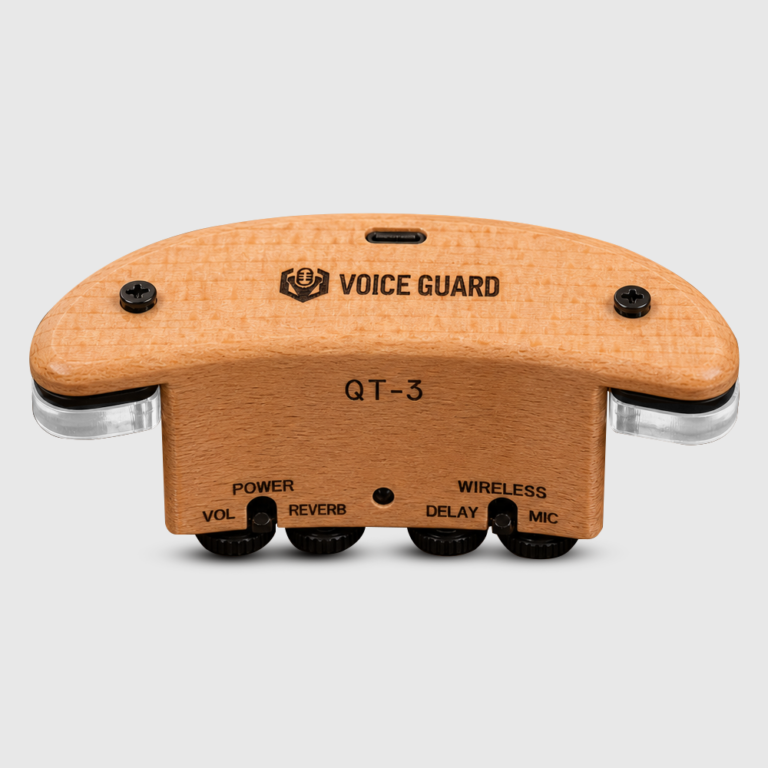
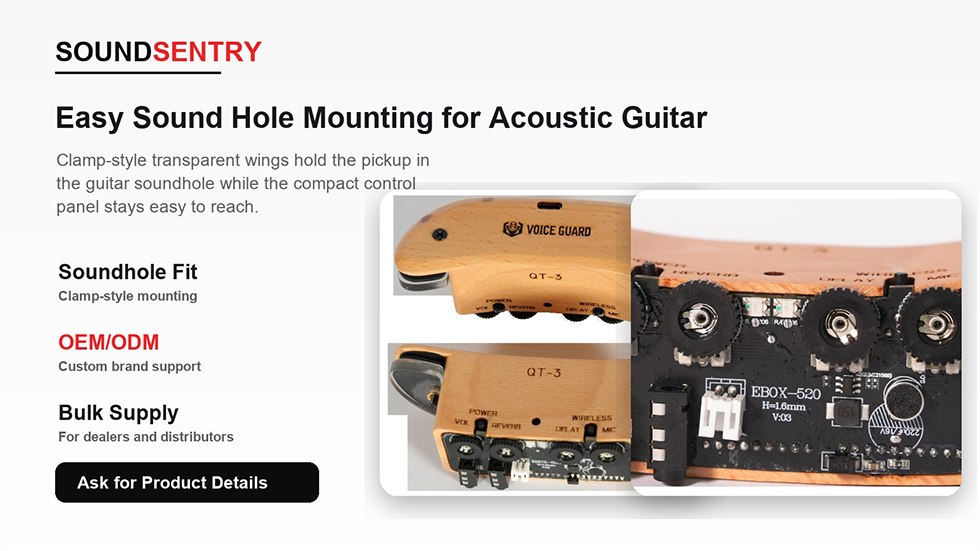
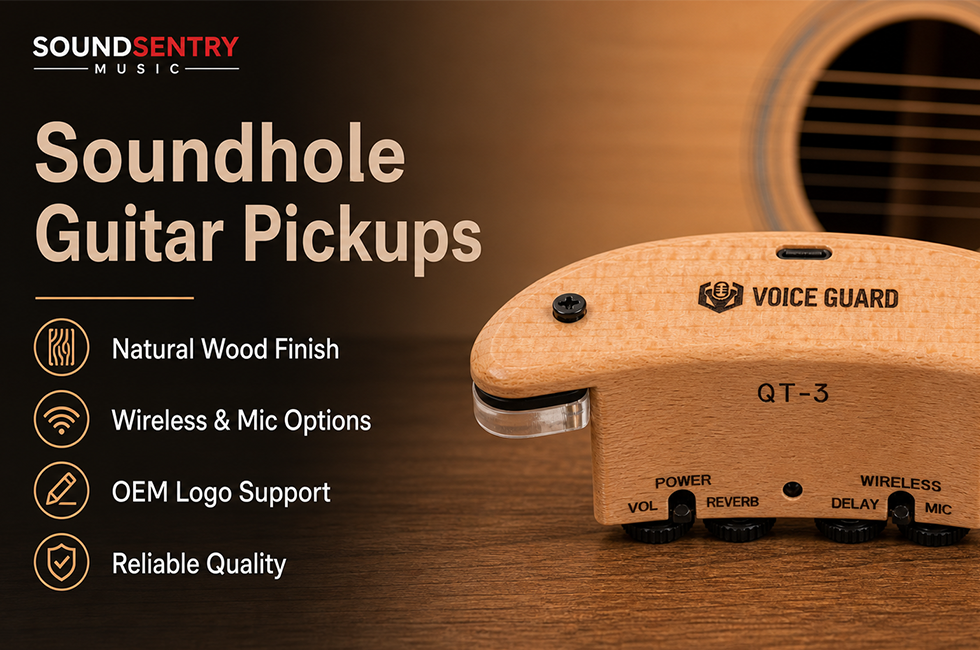
Soundhole pickups are popular because they are visible, easy to explain, and often easier to install than under-saddle systems. Many players do not want to modify their guitar permanently. A soundhole pickup that mounts securely and looks clean can be attractive for online sales.
Key design points include:
– Fit range for different soundhole diameters
– Clamp material and protection pads
– Cable routing
– Housing weight
– Control position
– Feedback behavior
– Output level
During sample testing, install the pickup on several guitars. Do not test only one instrument. Check whether the clamps feel secure, whether the finish is protected, and whether the pickup sits straight. A small installation problem can become a large return problem after launch.
Built-In Effects Can Help the Product Stand Out
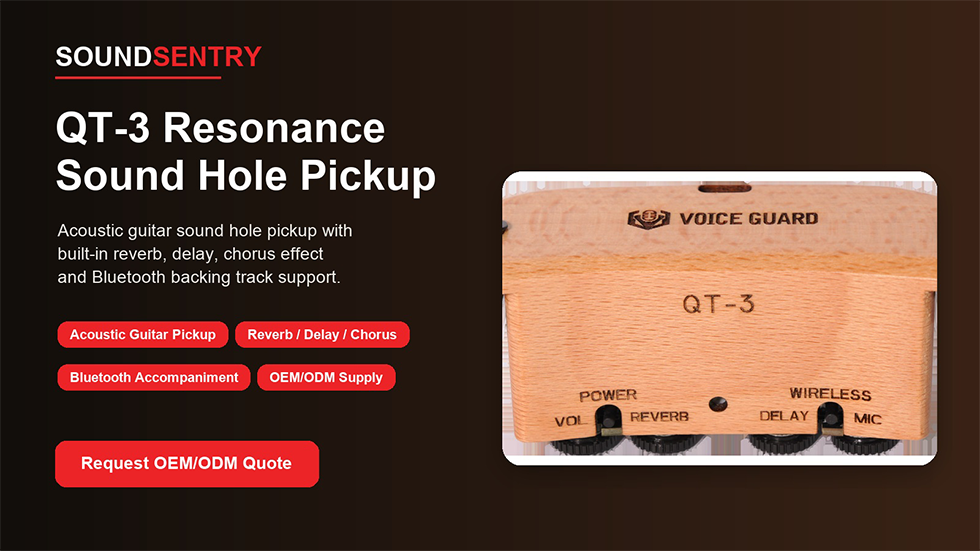
Some acoustic pickup systems include reverb, delay, chorus, or resonance enhancement. These features can make the product more exciting, especially for players who want a richer sound without carrying extra pedals.
However, effects should be musical and easy to control. A reverb that sounds metallic or a chorus that adds noise can damage the product experience.
When reviewing samples, test:
– Dry acoustic tone
– Reverb at low and high settings
– Delay repeat clarity
– Chorus noise level
– Effect bypass behavior
– Output level when effects are active
For private label products, built-in effects are useful for differentiation. They also create strong product page content because buyers can show before-and-after sound demos.
Bluetooth Playback: Useful, But Explain It Correctly
Bluetooth in an acoustic pickup system is usually used for playing backing tracks, not for transmitting the guitar signal with zero latency. Product descriptions should be honest. A good claim is “Bluetooth playback for practice tracks.” A risky claim is “Bluetooth wireless guitar performance” unless the system is specifically designed and tested for that.
For practice-focused products, Bluetooth playback can be valuable. A player can hear a backing track while the pickup handles the guitar sound. This is especially useful for home practice, teaching, and short-form video creation.
Test Bluetooth behavior for:
– Pairing speed
– Volume balance
– Background noise
– Reconnection
– Battery impact
– Interference with pickup output
Rechargeable Battery and USB-C Charging
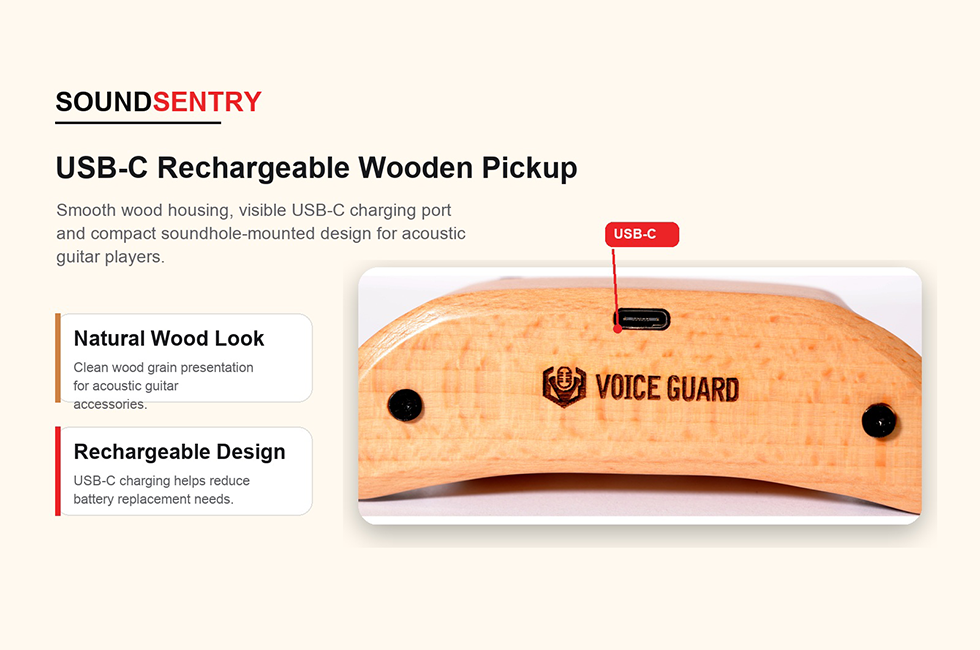
Rechargeable design is convenient, but it must be reliable. USB-C charging is now expected by many customers, especially in online retail markets.
Buyers should confirm:
– Battery capacity
– Charging time
– Runtime with effects off
– Runtime with effects and Bluetooth active
– Low battery indicator
– Charging protection
– Battery documentation for shipping
The most important point is not the largest claimed runtime. It is whether the published runtime matches normal use. If the product says long battery life but fails during a gig or lesson, customer trust disappears.
Tone Consistency in Mass Production
For pickups, consistency is critical. Customers may not measure every unit, but they will notice if one unit is much louder, noisier, or darker than another.
OEM buyers should discuss:
– Output tolerance
– Noise floor standard
– Functional test process
– Audio test method
– Cosmetic standard
– Battery test
– Packaging inspection
If the pickup includes magnetic components, coil winding, or active electronics, ask how the supplier controls variation. A good factory should be able to explain testing clearly, not just say “quality is good.”
Packaging and Installation Instructions
Acoustic pickup packaging should reduce confusion. Many buyers are not technicians. If installation looks difficult, they may choose another product.
Good packaging should include:
– Product photo
– Main feature list
– Compatible guitar type
– Installation steps
– Charging instructions
– Control explanation
– Warranty or support information
Inside the box, a simple quick-start guide is often more useful than a long manual. Use clear diagrams and short sentences. If the product requires careful cable positioning, show it visually.
Sample Approval Checklist
Before ordering mass production, test at least several samples:
– Install on different acoustic guitars
– Check output level
– Compare noise floor
– Test all controls
– Test effects
– Test Bluetooth playback
– Test USB-C charging
– Check battery runtime
– Inspect finish and housing
– Review packaging and manual
If possible, record short audio clips. Written feedback is useful, but sound samples make decisions faster.
For a more practical walkthrough, read our sound-hole pickup sample approval guide. It shows how to document fit, effects, Bluetooth, charging, accessories and packaging before giving the final production approval.
Final Thought
A custom acoustic guitar pickup is not only an electronic accessory. It is part of the player’s relationship with the instrument. If installation is easy, the tone is natural, and the controls are clear, the product can become a strong private label item for music brands and retailers.
Sound Sentry Music supports OEM/ODM pickup and music accessory projects, including acoustic pickup systems with effects, Bluetooth playback, rechargeable design, and private label packaging. For a smoother project, prepare your target guitar type, desired features, retail price range, and packaging needs before sampling.
FAQ
Are soundhole pickups easy to install?
Many soundhole pickups are designed for easy installation, but fit and clamp design must be tested on different guitars. Buyers should not assume one sample fits every instrument perfectly.
Should an acoustic pickup include effects?
Effects can add value if they sound musical and stay quiet. Reverb, delay, and chorus are useful for practice and performance, but poor effects can make the product feel cheap.
Why is pickup QC important?
Pickup customers notice noise, weak output, unstable controls, and inconsistent tone. QC should include audio output, noise, controls, charging, and cosmetic inspection.
Plan Your OEM/ODM Project
Share your target product, market, estimated quantity, branding, packaging and certification requirements with the SoundSentry Technical Team.
View Related Products Request Product Information or a Quote
OEM Buyer Checklist
- Define sound-hole fit and installation requirements.
- Confirm controls, effects and wireless or microphone functions.
- Test noise, output and feedback behavior.
- Approve branding, mounting parts, packaging and instructions.
Explore products, review our factory information, quality-control approach, OEM/ODM process or request model-specific information.
Frequently Asked Questions for OEM Buyers
Why should an acoustic pickup be tested on the target guitar?
Instrument dimensions, construction and installation can affect fit, sound and feedback behavior.
Which accessories should be confirmed?
Confirm mounting parts, charging or power accessories, cables, packaging and instructions for the selected model.
What belongs in sample approval?
Review fit, sound, controls, noise, effects or wireless functions, appearance, branding and packaging.