Bluetooth Audio for Musical Instruments: Complete Technical Guide
OEM Buyer Summary
This guide separates Bluetooth backing-track playback, app control, Bluetooth MIDI and real-time instrument-audio requirements for OEM product planning.
“Add Bluetooth” is not a complete product requirement. In musical equipment, Bluetooth may mean phone playback, app control, MIDI or another data function. It may also be requested for live instrument audio, which needs a different level of response testing.
The most useful thing an OEM buyer can do is name the function before discussing modules, versions or codecs.
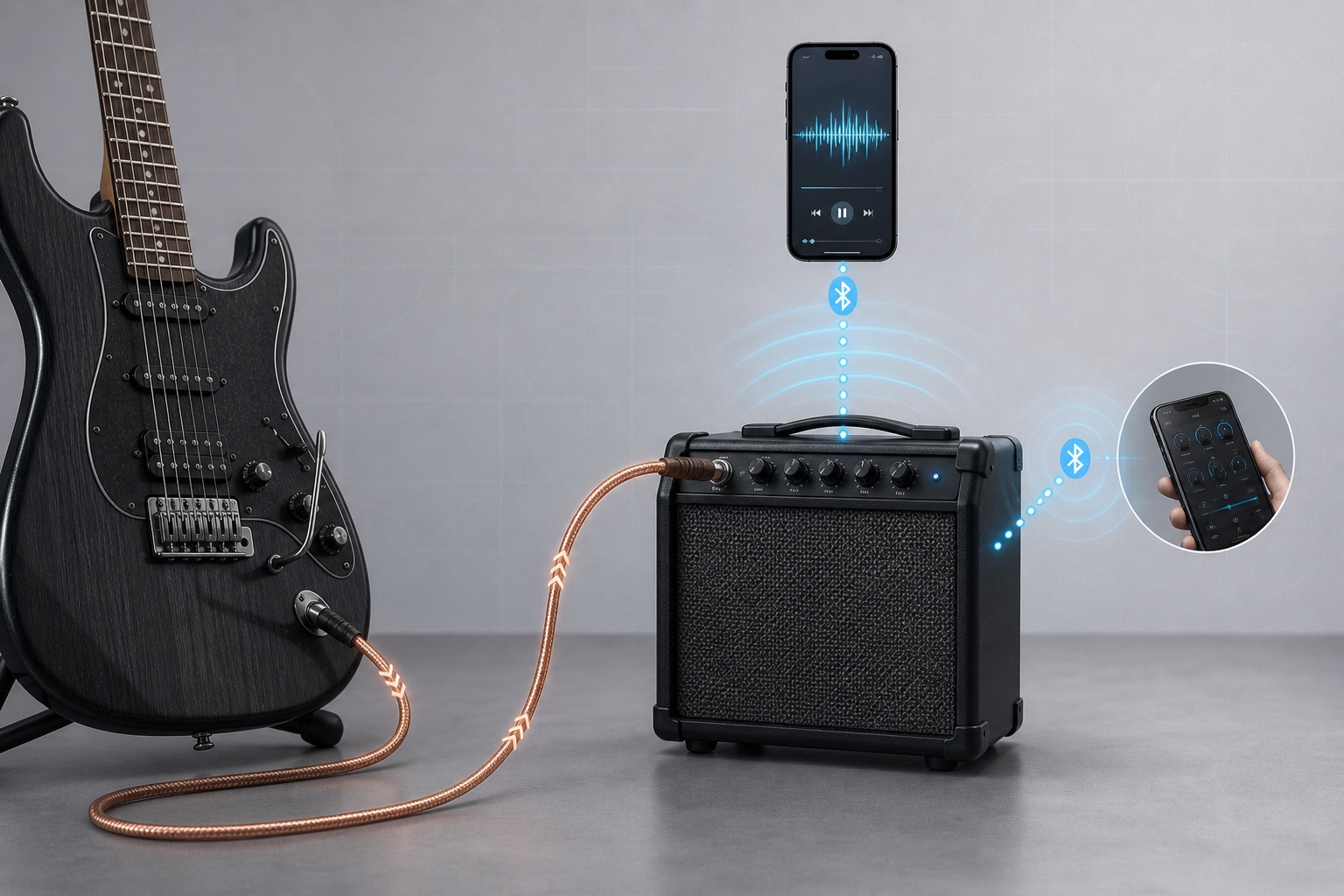
Four Bluetooth jobs that should not be mixed together
| Function | Typical user action | What must be confirmed |
|---|---|---|
| Backing-track playback | Play music or a lesson from a phone through an amplifier | Source compatibility, pairing, reconnect behavior, level control and mixing with the instrument |
| App control | Edit tone, effects or presets on a phone | Supported operating systems, app ownership, update responsibility and behavior when the app is unavailable |
| MIDI or control data | Send performance or setup commands | Supported message set, timing, pairing and fallback behavior |
| Live instrument audio | Hear the played note through a wireless audio path | End-to-end delay, stability, audio quality, interference behavior and monitoring setup |
One product can include more than one function, but each should have its own acceptance test. A sample that pairs successfully has not automatically passed an audio-delay or app-compatibility test.
Bluetooth version is not the product specification
A newer Bluetooth core version can make newer features available to developers, but the number printed in a product listing does not tell a buyer which profiles, codecs or functions were implemented. Hardware, firmware, antenna design and the source device all affect the result.
Bluetooth LE Audio, for example, introduces a different audio architecture and uses the LC3 codec. The Bluetooth SIG describes LC3 as a high-quality, low-power codec and notes that LE Audio relies on features introduced with Bluetooth Core 5.2. That is useful design context, but it is not evidence that every product advertised as “Bluetooth 5.2” supports LE Audio or behaves the same way.
For sourcing, request a function statement rather than a version badge:
The amplifier shall receive phone audio for backing-track playback, mix it with the guitar channel, reconnect to the last approved device after power-up, and provide separate level control.
That sentence gives the engineering team something testable.
Codecs matter, but the complete path matters more
Bluetooth audio codecs affect compression, compatibility and buffering. They are often presented in marketing tables as if one name guarantees a fixed result. In practice, both ends of the connection must support the selected mode, and the finished product may fall back to another supported option.
For a guitar amplifier used as a phone speaker, the buyer should ask:
- Which source devices and operating systems were included in testing?
- What happens when the preferred codec is unavailable?
- Can phone audio and the guitar channel be adjusted independently?
- Does an incoming call or notification interrupt playback?
- Is the audio level remembered after power cycling?
- What happens when a second phone tries to connect?
For live instrument audio, do not approve the design from a codec data sheet. Measure the complete signal path and conduct a playing test with the production-intent hardware.
Bluetooth in a guitar amplifier
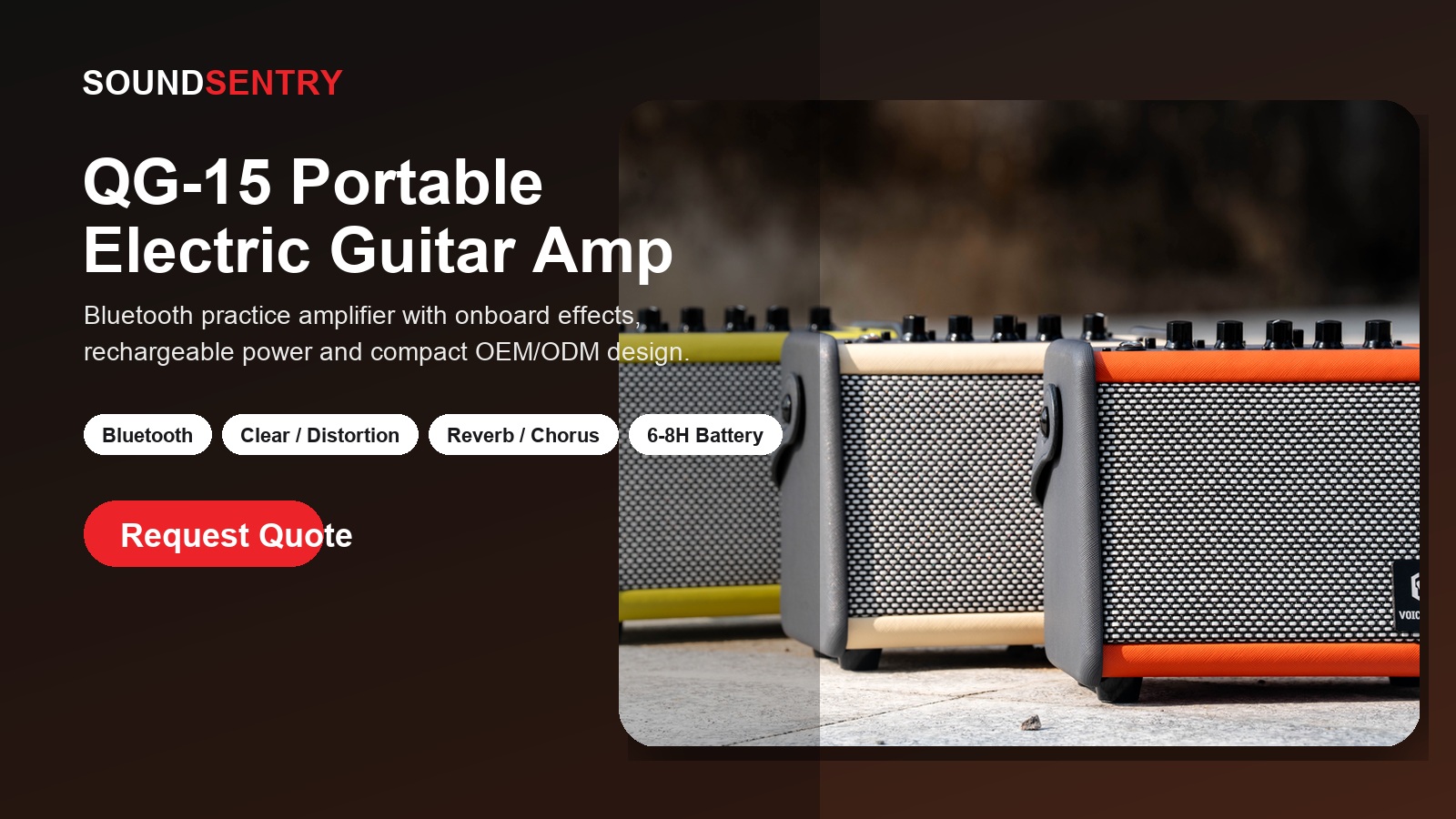
The common and useful implementation is phone-to-amplifier playback. A player can run a lesson, metronome or backing track through the amplifier while the guitar remains on its normal wired or dedicated wireless input.
This design still needs careful product decisions. The Bluetooth playback level may be controlled by the phone, the amplifier or both. The signal may enter before or after effects processing. The speaker and power stage must handle the combined signal without unexpected clipping. These choices should be visible in the block diagram and sample checklist.
Before sample approval, test:
- First-time pairing with representative phones.
- Reconnection after the amplifier and phone are restarted.
- Playback while the guitar channel is active.
- Minimum and maximum level behavior.
- Notification, call and app-switching behavior.
- Recovery after moving out of range and returning.
- Operation near routers and other Bluetooth devices.
Browse the SoundSentry guitar amplifier range for possible product formats. Bluetooth functions and specifications must be confirmed for the model selected for an OEM project.
App control needs an ownership plan
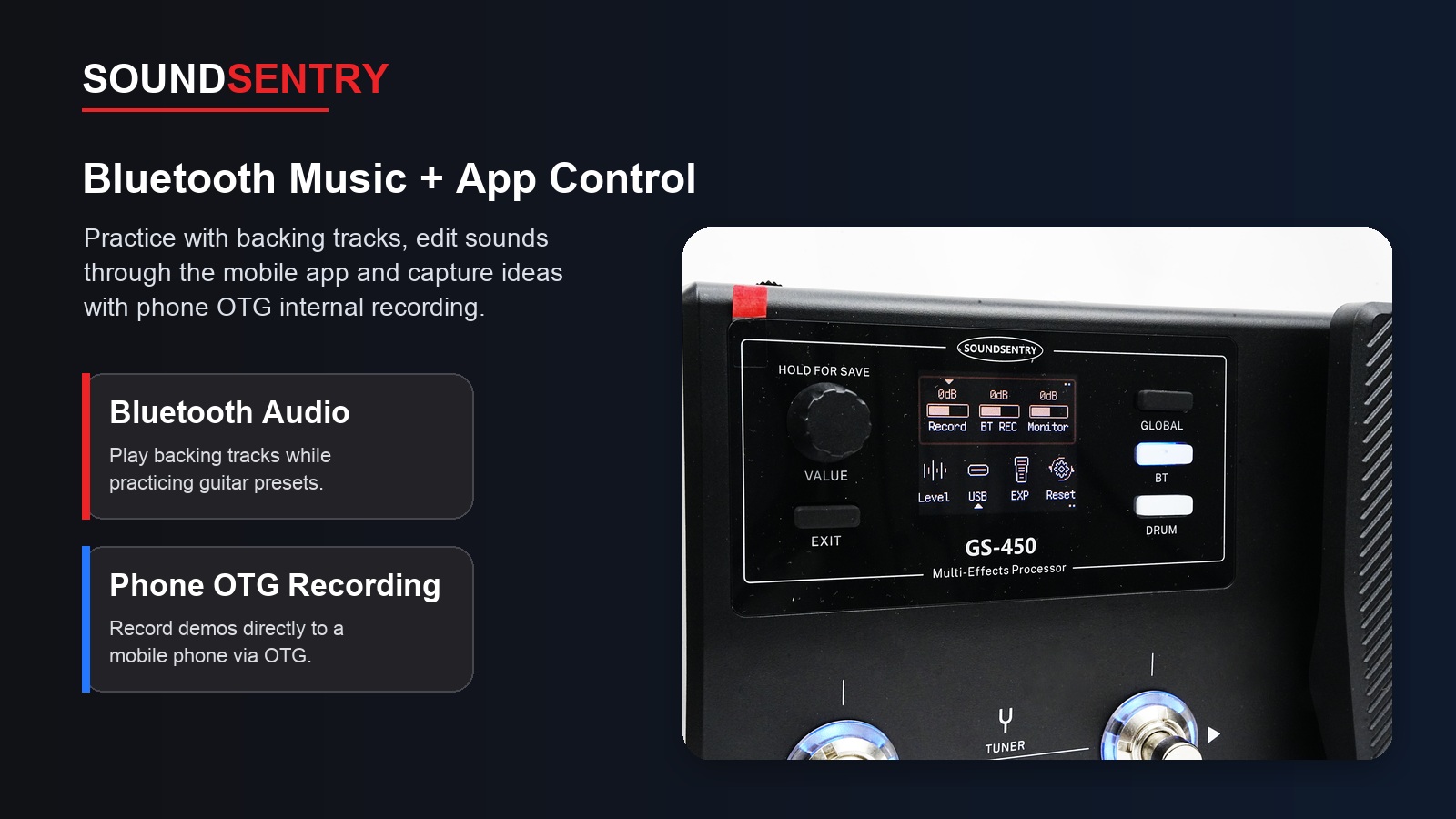
An app-controlled product is not only a hardware project. Someone must own the app account, source code, store listing, privacy information, compatibility testing and future updates.
Buyers should settle these questions early:
- Is the app existing, white-label or newly developed?
- Who publishes it in the app stores?
- Which phone and operating-system versions are supported?
- Can the product perform its main function without the app?
- How are firmware updates delivered and recovered if interrupted?
- Who handles user data, permissions and support requests?
These are commercial and maintenance decisions as much as technical ones. Leaving them until the packaging stage creates avoidable rework.
Live guitar audio requires a separate decision
Players hear the result of every stage between the string and the speaker. A Bluetooth feature intended for backing tracks may be perfectly acceptable for that job while still being unsuitable for the live guitar path.
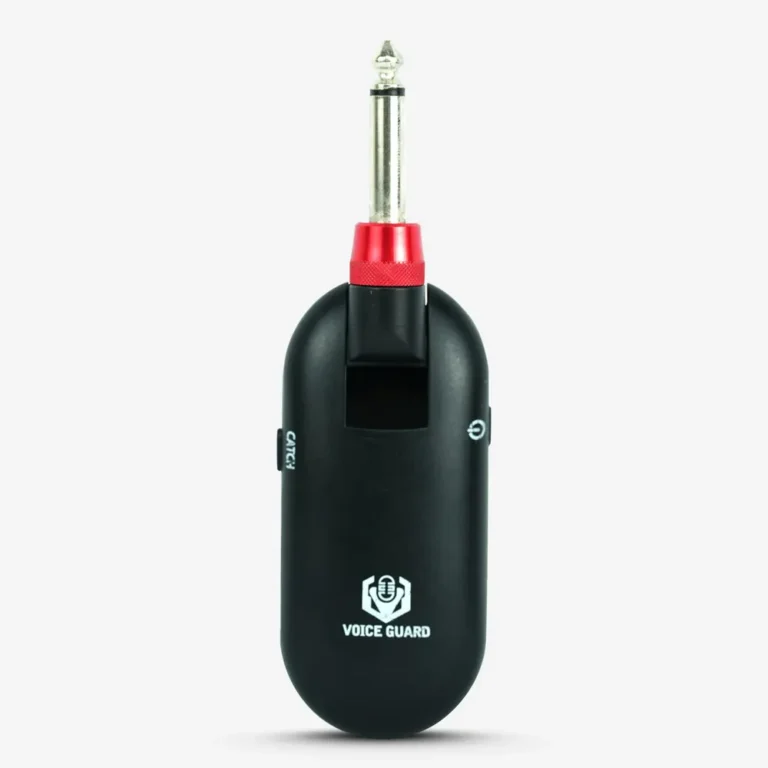
If the product brief asks for Bluetooth instrument transmission, define:
- the exact transmitter and receiver combination;
- where delay is measured;
- the monitoring path used during the test;
- acceptable behavior during interference or packet loss;
- compatibility with active and passive instruments;
- how multiple units behave in the same space;
- what happens as the battery approaches its low-power threshold.
It may be more appropriate to keep Bluetooth for phone interaction and use a dedicated wireless instrument system for the live signal. The choice should follow the use case and test result, not the popularity of a technology name.
Product qualification and market compliance
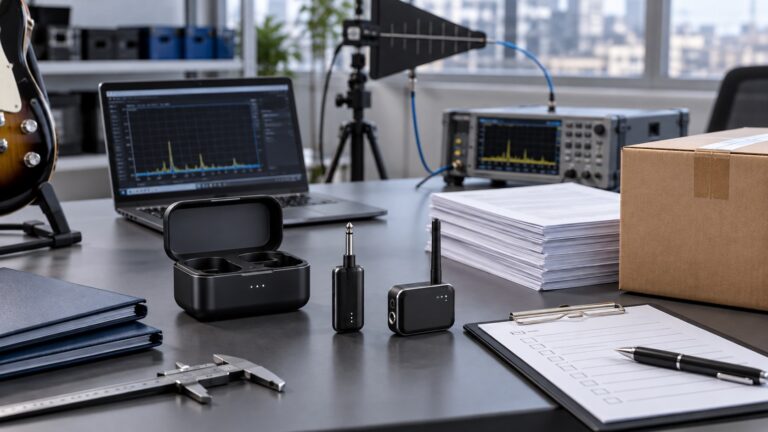
Using Bluetooth technology and trademarks involves Bluetooth SIG requirements, while radio and product compliance depend on the final design and sales market. A qualified or approved module can reduce some engineering work, but it does not automatically establish compliance of the complete branded product.
During sourcing, ask for:
- module identification and supplier documentation;
- antenna type and approved layout conditions;
- Bluetooth function/profile information;
- qualification information relevant to the proposed implementation;
- target-market radio and product test documents;
- a change-control process for modules, firmware and antennas.
Confirm the applicable path with a qualified laboratory or compliance adviser before release. Our electronic product certification page explains the project information to prepare.
Bluetooth sample-approval checklist
- The Bluetooth function is written in user language.
- Supported phones, operating systems and app versions are listed.
- Pairing, reconnection and multi-device behavior are recorded.
- Audio mixing and level control match the product brief.
- Live-audio delay is measured only if that function is required.
- Antenna and enclosure configuration match the intended product.
- Module, firmware and antenna revisions are controlled.
- Model-specific compliance documents are reviewed for the target market.
- User manual and packaging claims match the tested function.
Frequently asked questions
Does a newer Bluetooth version guarantee lower audio delay?
No. A core-version number does not prove which audio features were implemented or the end-to-end result of the finished product. Confirm the function and test the complete signal path.
Is Bluetooth useful in a guitar amplifier?
Yes. Phone playback for lessons, backing tracks and general listening is a clear use case. It should be specified separately from the live guitar input and tested for pairing, mixing and compatibility.
Can a pre-qualified module cover the whole product?
Not automatically. Module documentation can support the project, but antenna choices, integration, enclosure, power system, firmware and market rules may create additional obligations. Confirm the final route for the exact product and destination.
Prepare a Bluetooth brief before sampling
Send SoundSentry Music the product type, Bluetooth job, intended source devices, target markets, branding and estimated quantity through our contact page. We will confirm which functions and documents can be evaluated for the proposed model.
Plan Your OEM/ODM Project
Share your target product, market, estimated quantity, branding, packaging and certification requirements with the SoundSentry Technical Team.
View Related Products Request Product Information or a Quote
OEM Buyer Checklist
- Define the exact Bluetooth use case.
- Confirm supported profiles, codecs or control functions by model.
- Test pairing and reconnection behavior.
- Evaluate audio delay for the intended application.
- Check phone and operating-system compatibility where relevant.
- Confirm radio and target-market documentation needs.
Continue with our OEM/ODM process, quality-control approach, certification guidance or request model-specific information.
Frequently Asked Questions for OEM Buyers
What Bluetooth functions can a music product use?
Depending on the model, Bluetooth may support backing-track playback, app control, MIDI data or other functions; these should be specified separately.
Does Bluetooth support guarantee low-latency instrument audio?
No. Bluetooth support alone does not establish suitability for real-time guitar transmission; the implementation and measured performance must be evaluated.
What compatibility information should a buyer request?
Request the supported function, profiles or codecs where applicable, device requirements, app information and model-specific test results.