Before Approving a Sound-Hole Pickup Sample: 7 Checks That Matter
A practical sample review for acoustic sound-hole pickups, covering fit, tone, effects, charging, Bluetooth, accessories and OEM packaging.
When a new sound-hole pickup sample arrives, it is tempting to install it on the nearest guitar, play a few chords and decide whether it sounds good. That tells you something—but not enough to approve a production order.
A buyer is not approving one pleasant ten-minute test. You are approving a product that must fit different instruments, make sense to first-time users and arrive with the right accessories and instructions. The less glamorous checks are often the ones that prevent returns later.
Here is the review sequence we recommend when discussing an acoustic pickup project with a brand or distributor.
1. Start with fit, not the feature list
The first question is simple: does the pickup sit securely on the guitars your customers actually use?
Try more than one instrument. Sound-hole diameter, rosette thickness and the shape around the mounting area can vary. Check that the contact points do not leave marks, that the controls remain reachable and that the cable or connected parts do not interfere with the player’s right hand.
A drill-free design is useful, but “drill-free” does not automatically mean “fits every guitar.” Record the instruments used during the test and keep photographs of the installed position. That small habit makes later sample discussions much clearer.
2. Listen for a usable range, not one impressive setting
A sample can sound exciting with one guitar and one speaker. The more useful test is whether it remains controllable across quiet fingerstyle playing, normal strumming and harder percussive playing.
Listen for uneven response between strings, unwanted handling noise and a sudden jump in level when the player changes technique. If the pickup is intended for both practice and small performances, test it at both low and realistic stage volume.
We also suggest recording short clips with the settings written down. Memory is unreliable after several samples have been compared; a labelled recording is not.
3. Test effects at ordinary settings
Built-in effects are easy to demonstrate at their most dramatic. Buyers should spend more time in the middle of the control range.
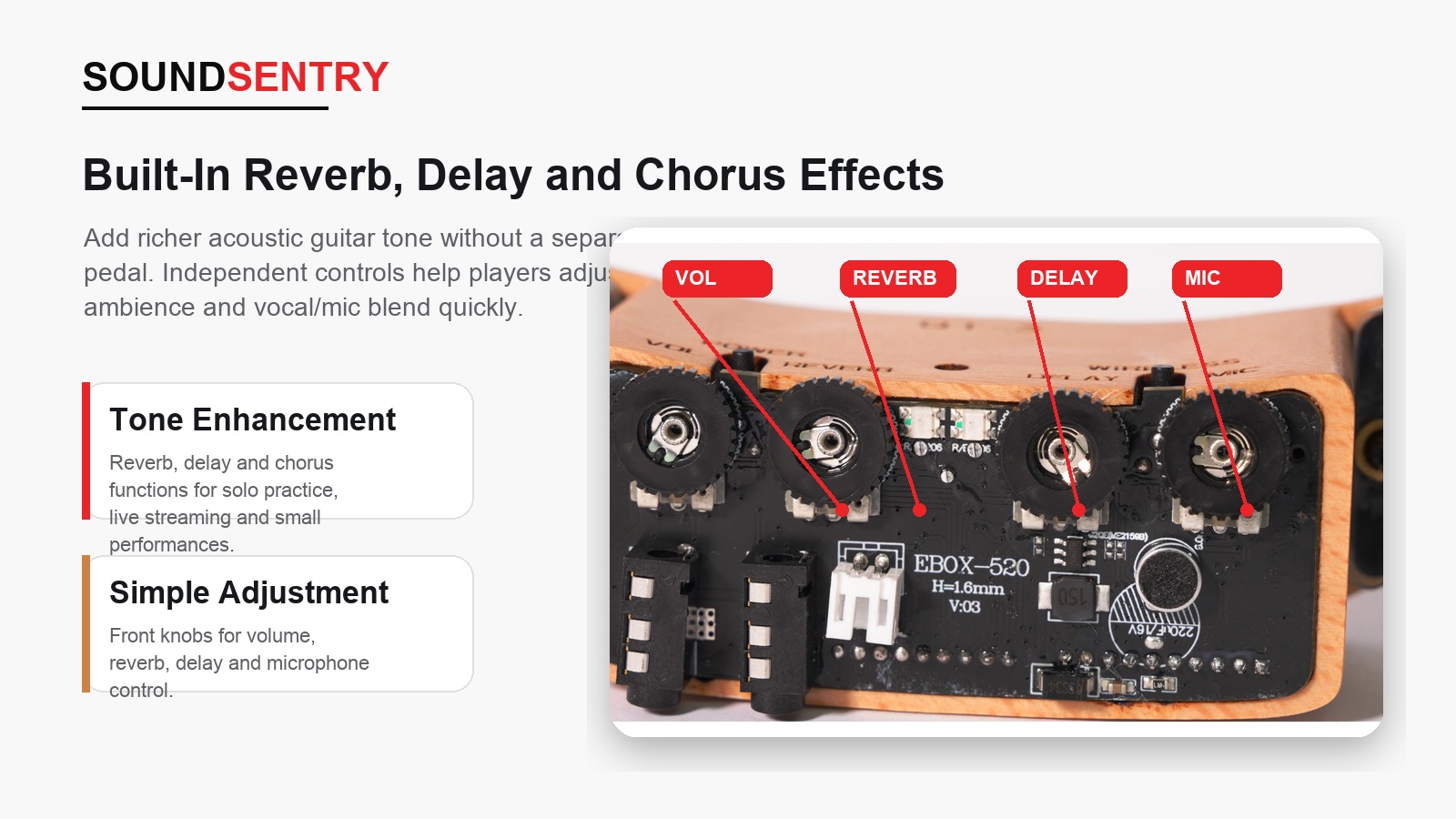
With reverb, delay and chorus, check how smoothly each effect enters as the control is adjusted. Can a player find a subtle setting without trial and error? Does the dry guitar remain clear? Are there level changes when an effect is switched or adjusted?
This matters because the factory sample is usually tested by someone who already understands the controls. The retail customer may open the box without that context.
4. Treat Bluetooth as part of the user workflow
If Bluetooth is used for backing tracks, test the whole routine rather than the connection alone: pairing, reconnecting after power-off, phone volume adjustment and the balance between the backing track and guitar signal.
Use at least two common phones if possible. Also ask what the user should do when the previous phone is still remembered. A short, accurate instruction can prevent a function that works correctly from being mistaken for a fault.
5. Give charging and controls the “boring” test
Charging tests are rarely the exciting part of a sample review, which is exactly why they are missed.
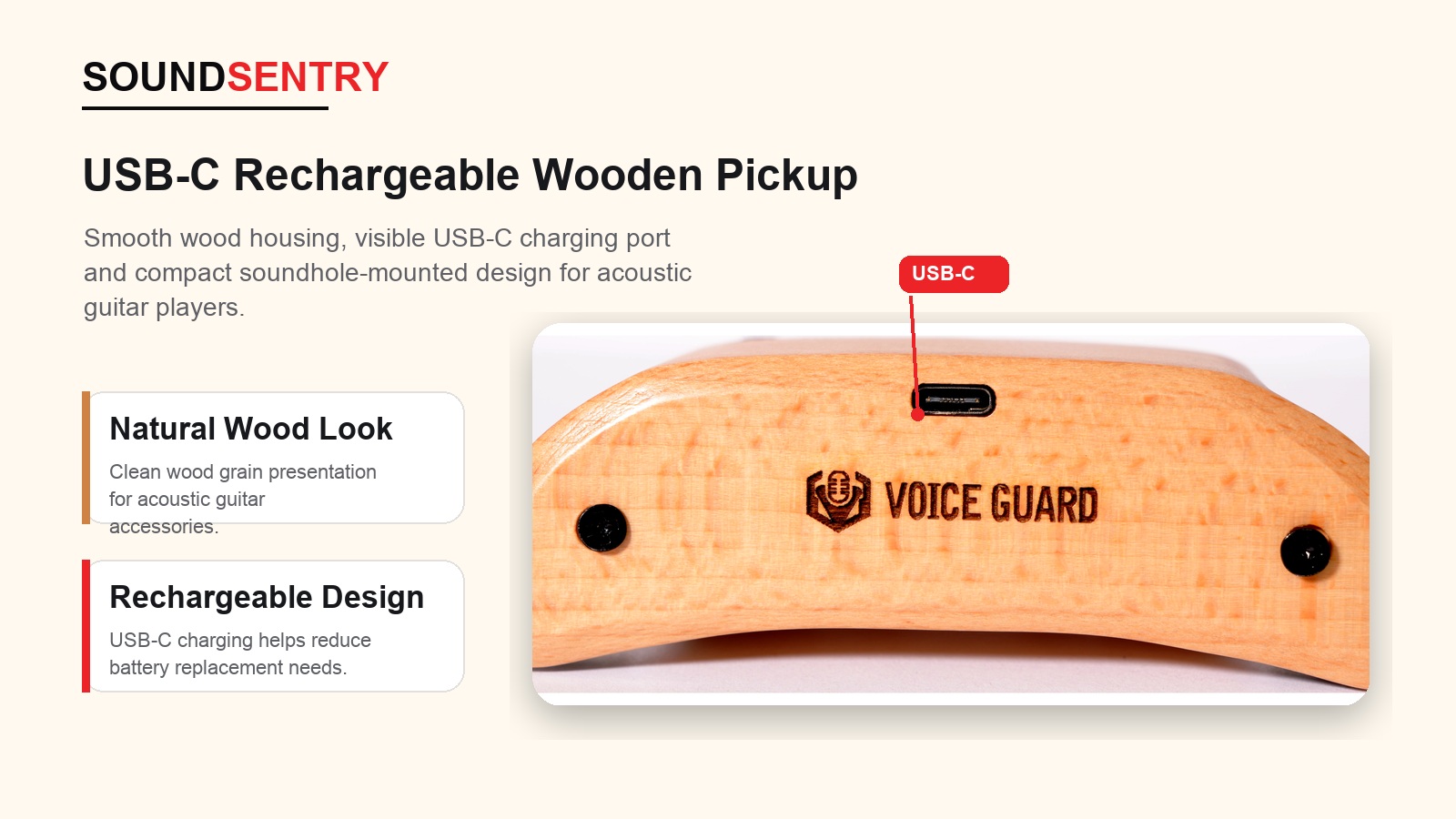
Confirm the supplied cable, charging indicator behaviour, power switch and what happens at low battery. Leave the unit unused, return to it later and check whether the controls still behave as expected. Turn each knob slowly and listen for noise or unstable response.
The exact battery and charging specification should be written into the approved model sheet. Do not rely on a general product-family description when several configurations are available.
6. Lay out every accessory on the table
Before approving the sample, empty the proposed retail box and place every part side by side: pickup, mounting components, cable, charging cable, instructions and any optional item.
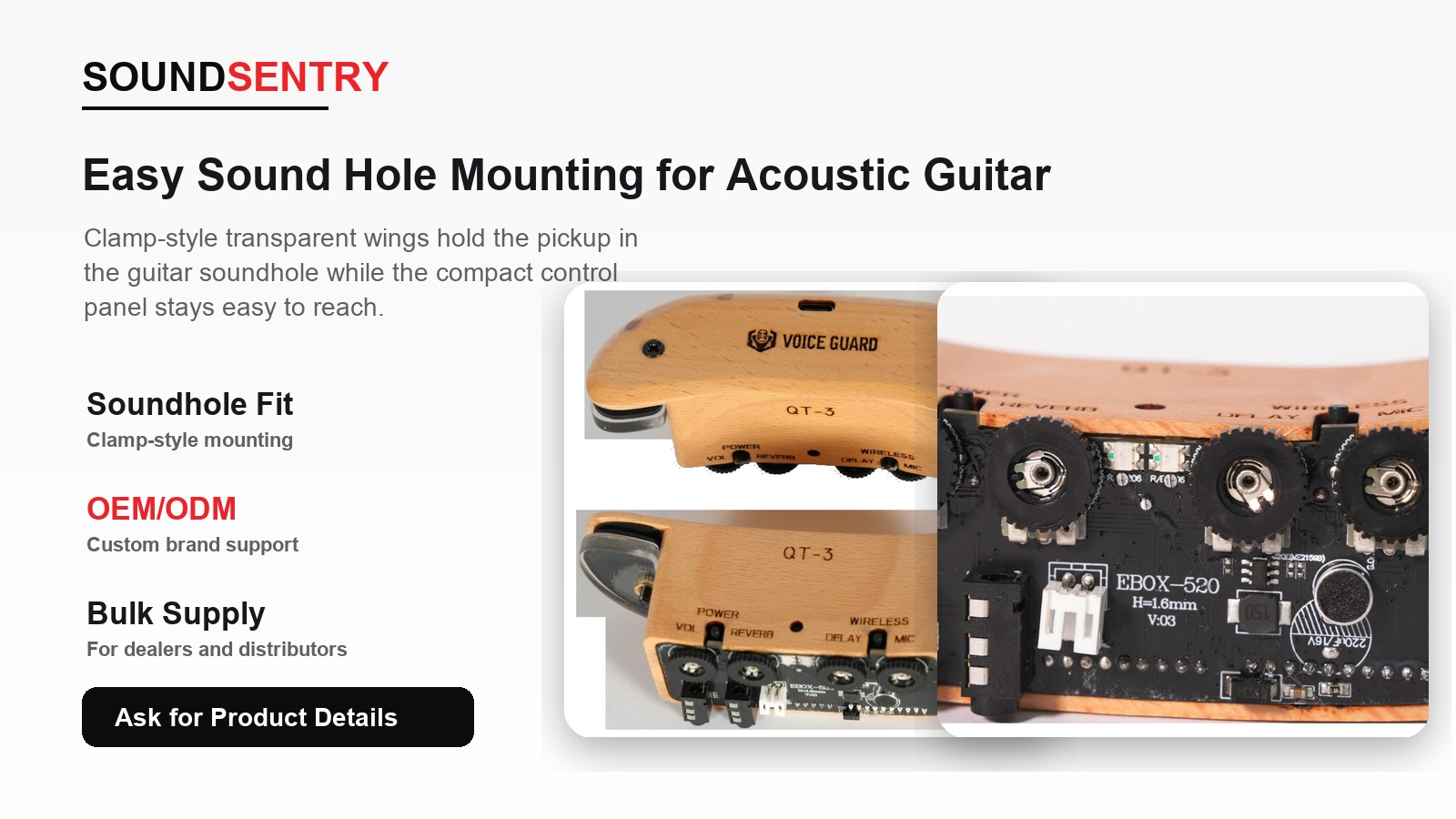
Then compare that layout with the quotation and instruction sheet. Names that sound similar in email can refer to different accessory versions. A photograph of the approved kit, signed off with the sample record, is often more useful than another long message thread.
For private-label orders, this is also the right time to confirm logo position, label content, packaging language and barcode space. Our OEM/ODM process explains where these decisions fit between the RFQ, sample approval and production stages.
7. Write the approval sheet before saying yes
A clear approval record does not need to be complicated. It should be specific enough that both buyer and production team are looking at the same product.
| Check | What to record |
|---|---|
| Instrument fit | Guitars tested, mounting position and any limits |
| Sound | Test setup, playing styles and accepted control range |
| Functions | Effects, Bluetooth and selected configuration |
| Power | Charging connection, indicator and supplied cable |
| Accessories | Photo and final packing list |
| Branding | Logo, labels, manual and packaging artwork version |
| Documents | Required model-specific certification documents |
That sheet becomes the reference for production inspection. It also gives the buyer a fair way to evaluate the bulk order against what was actually agreed. You can see the wider inspection approach on our quality control page.
After approval, the sample should be backed by a clear change record rather than left as the only reference. Our golden sample control plan shows how to carry the accepted functions, components, artwork, accessories and documents into bulk production.
A practical next step for a QT-3 project
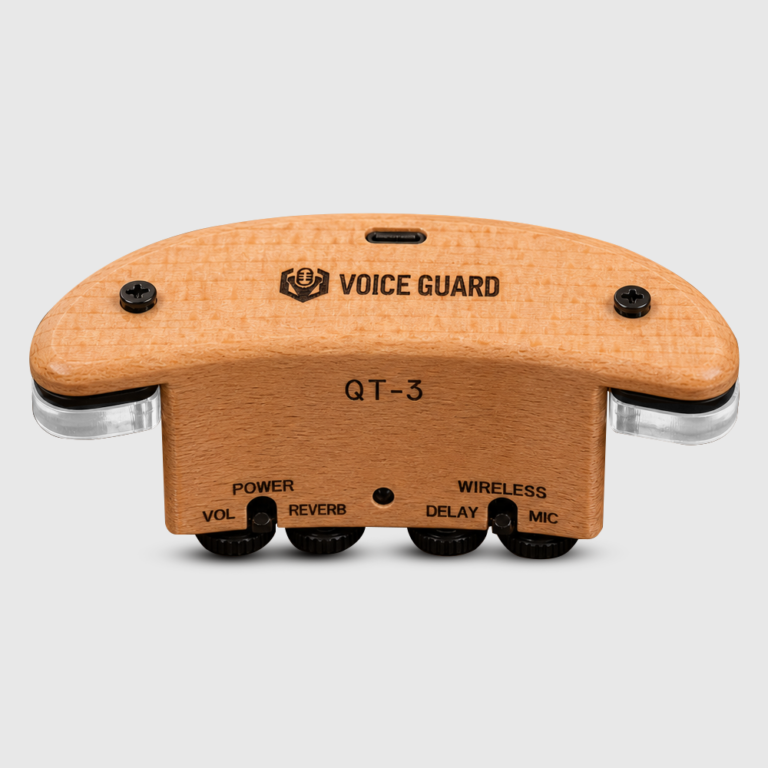
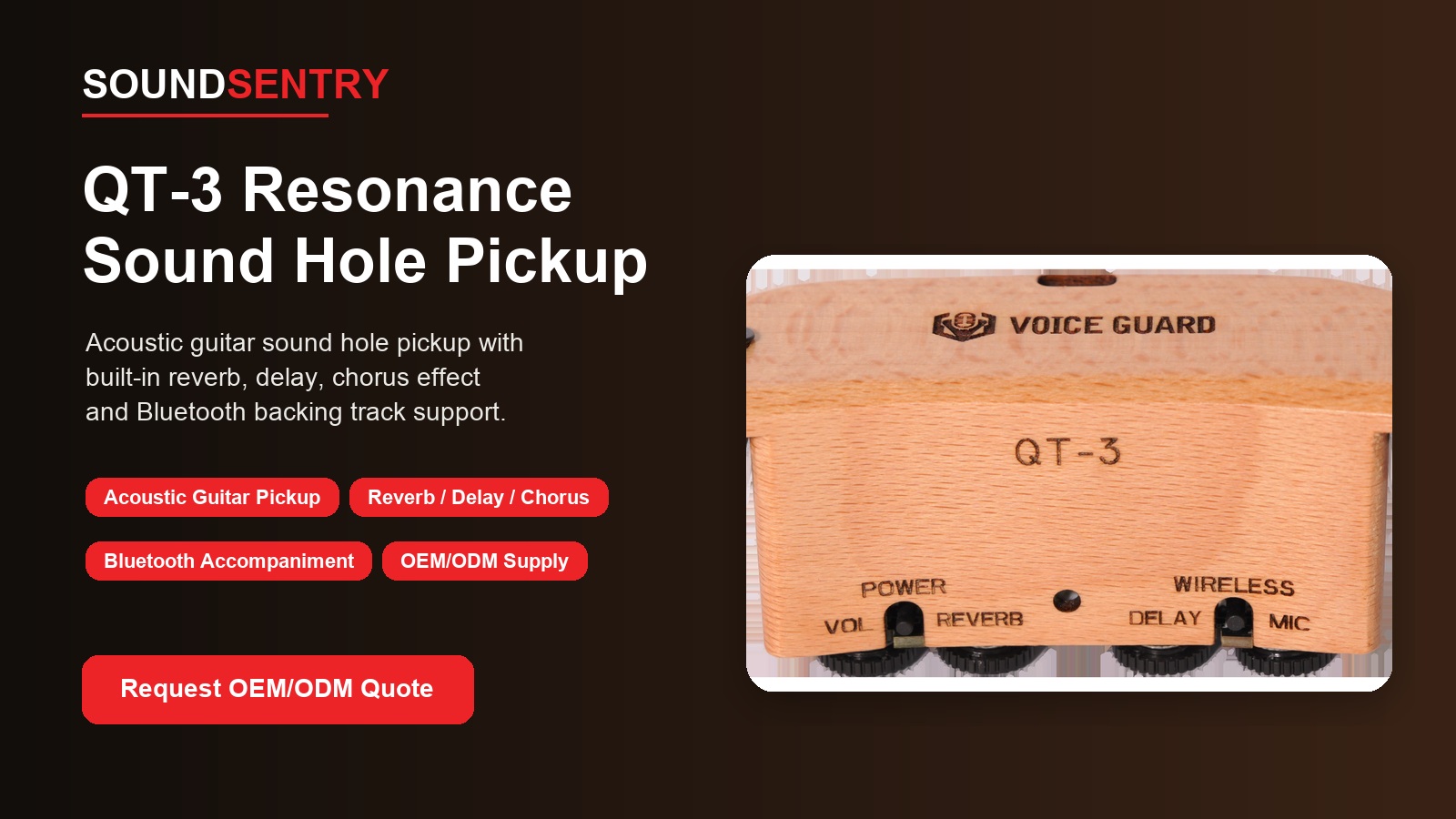
The QT-3 resonance sound-hole pickup combines a drill-free sound-hole format with built-in effects, Bluetooth backing-track support and rechargeable power. The final functions, accessories, branding and documentation still need to be confirmed for the selected OEM configuration.
If you are comparing pickup samples for a new product line, send us the target market, expected quantity, guitars used for evaluation and the functions that matter most. We can prepare the sample discussion around those details instead of sending a generic specification list.
For broader product planning, the custom acoustic guitar pickup OEM guide covers positioning and project decisions before sampling.
Contact SoundSentry Music: info@soundsentrymusic.com or WhatsApp +86 135 7037 9630.
Plan Your OEM/ODM Project
Share your target product, market, estimated quantity, branding, packaging and certification requirements with the SoundSentry Technical Team.
View Related Products Request Product Information or a Quote