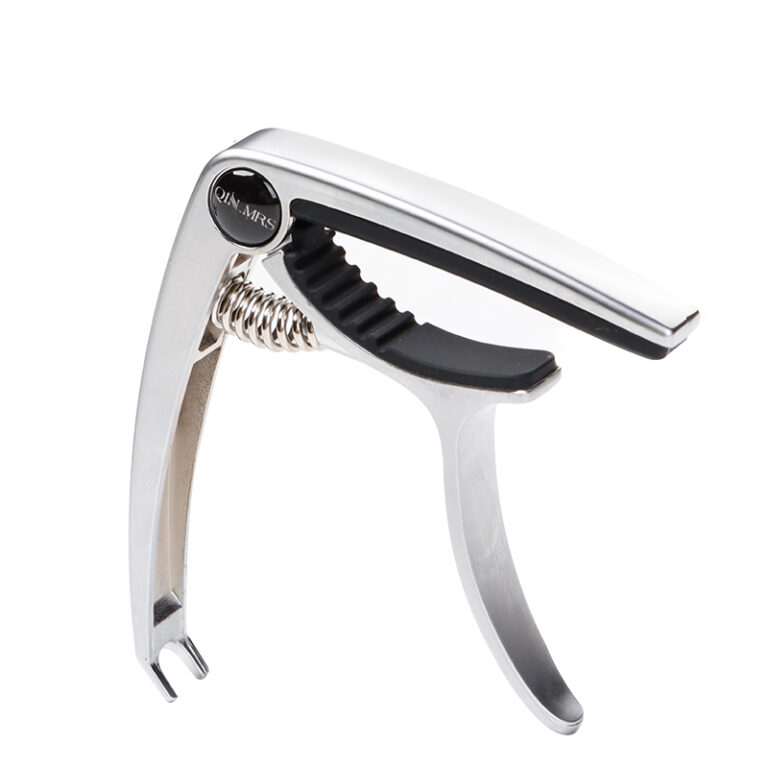
How to Choose a Guitar Capo Supplier: Fit, Tuning and Private-Label Checks
A practical B2B guide to evaluating guitar capo compatibility, construction, sample approval and retail-presentation requirements.
A capo is a compact product, but wholesale selection still requires more than comparing material names and price. Buyers need to know which guitars the product is intended to serve, how contact surfaces protect the instrument, how the mechanism feels in use and how the approved product will be presented at retail.
The first step is to define the intended instrument types. Do not assume that a capo intended for one neck profile will suit every guitar. A buyer should state the target acoustic or electric guitar applications and request confirmation for any additional instrument types or special compatibility needs.
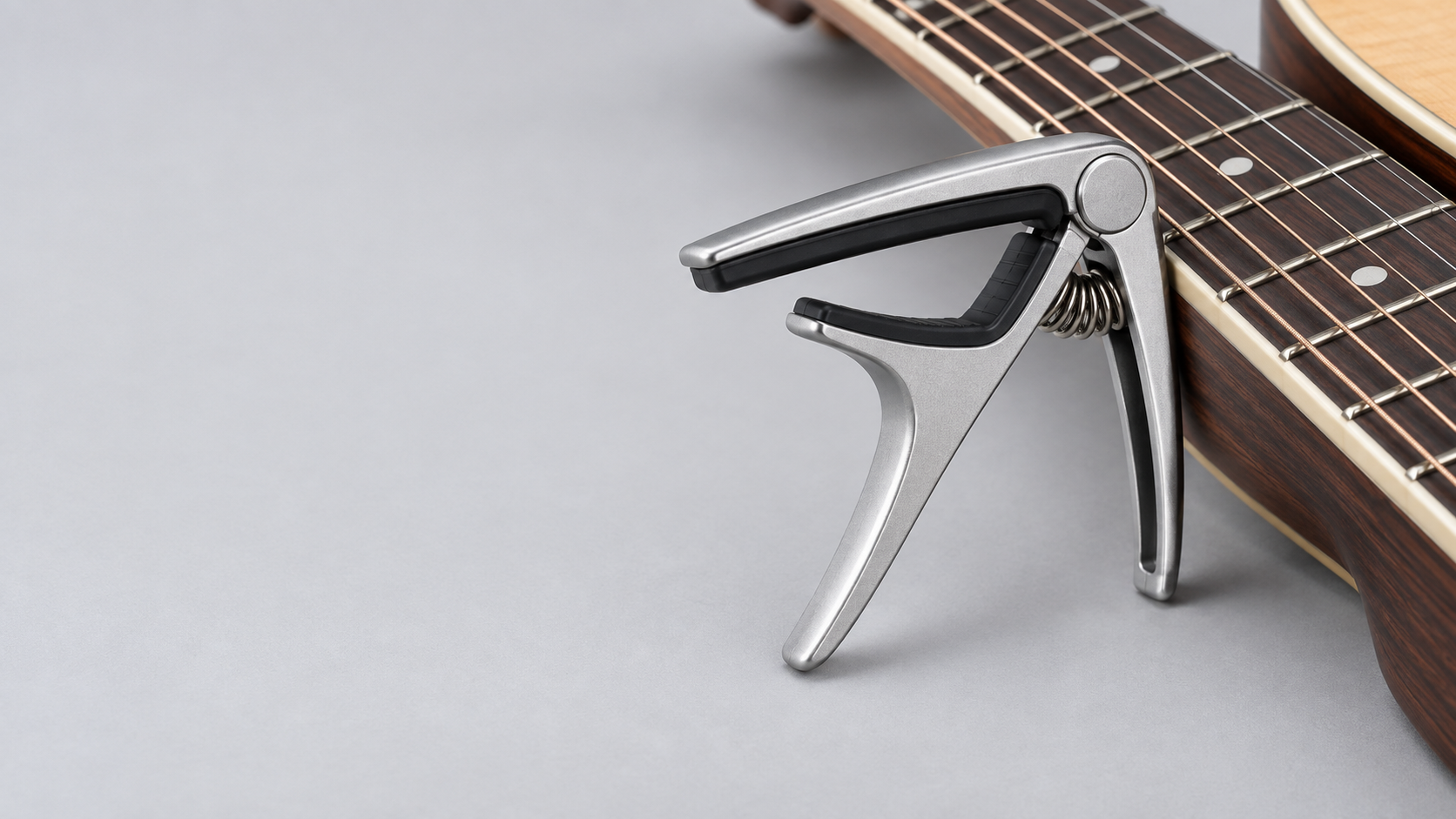
Check construction and contact surfaces
Ask for the selected model’s construction details rather than a generic category description. The live SoundSentry Zinc Alloy Guitar Capo is described with a zinc-alloy body, rubber contact surfaces and an integrated string-pin puller, and is intended for acoustic and electric guitar accessory programs. Those details are useful starting points, but the buyer should still confirm the exact product version being quoted.
During sample review, check the body, rubber contact pads, hinge or spring movement, visible finish and any integrated feature. The aim is not to make an unsupported performance claim. It is to create an approval record that links the supplied sample to the subsequent order.
Make compatibility part of sample approval
A good sample review uses the guitars that the intended customer is most likely to own. Record the target instrument types and assess whether the contact surfaces sit cleanly, the action is practical and the product can be fitted and removed without an avoidable issue. If the buyer requires classical, 12-string, ukulele or another application, that should be confirmed for the selected version rather than inferred from an acoustic/electric description.
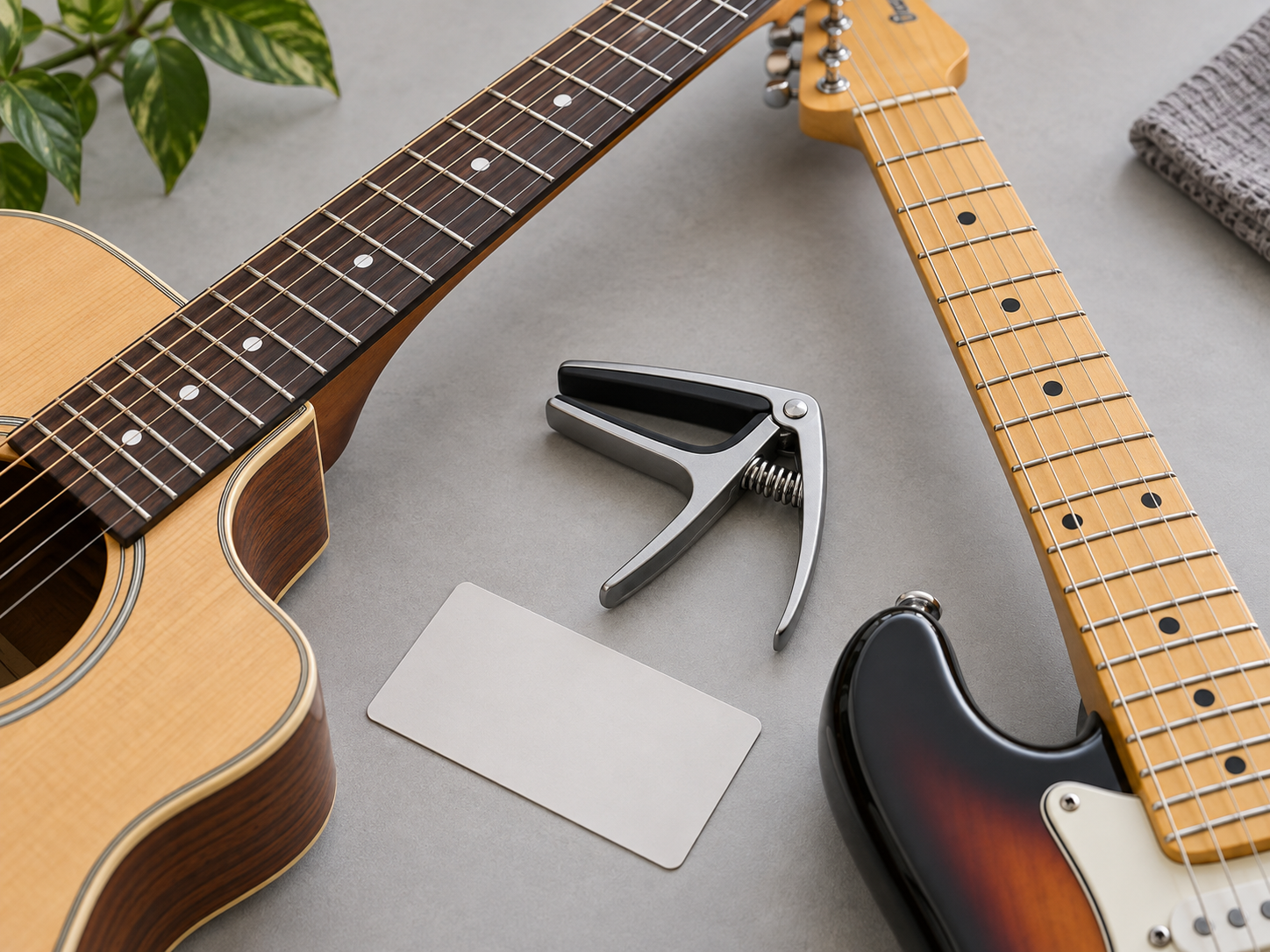
Request Capo Sample Information
Send the intended guitar types, target market, estimated quantity and packaging needs through SoundSentry’s capo inquiry page.
Discuss retail presentation before the quote is final
Retail packaging is part of the buying decision. A private-label discussion can include logo placement, finish or color preference, packaging format, accessory combinations, sample quantity and estimated order volume. These are project discussions, not automatic promises. Keep the approved packaging format together with the product record so that a repeat order can be matched to the reviewed configuration.
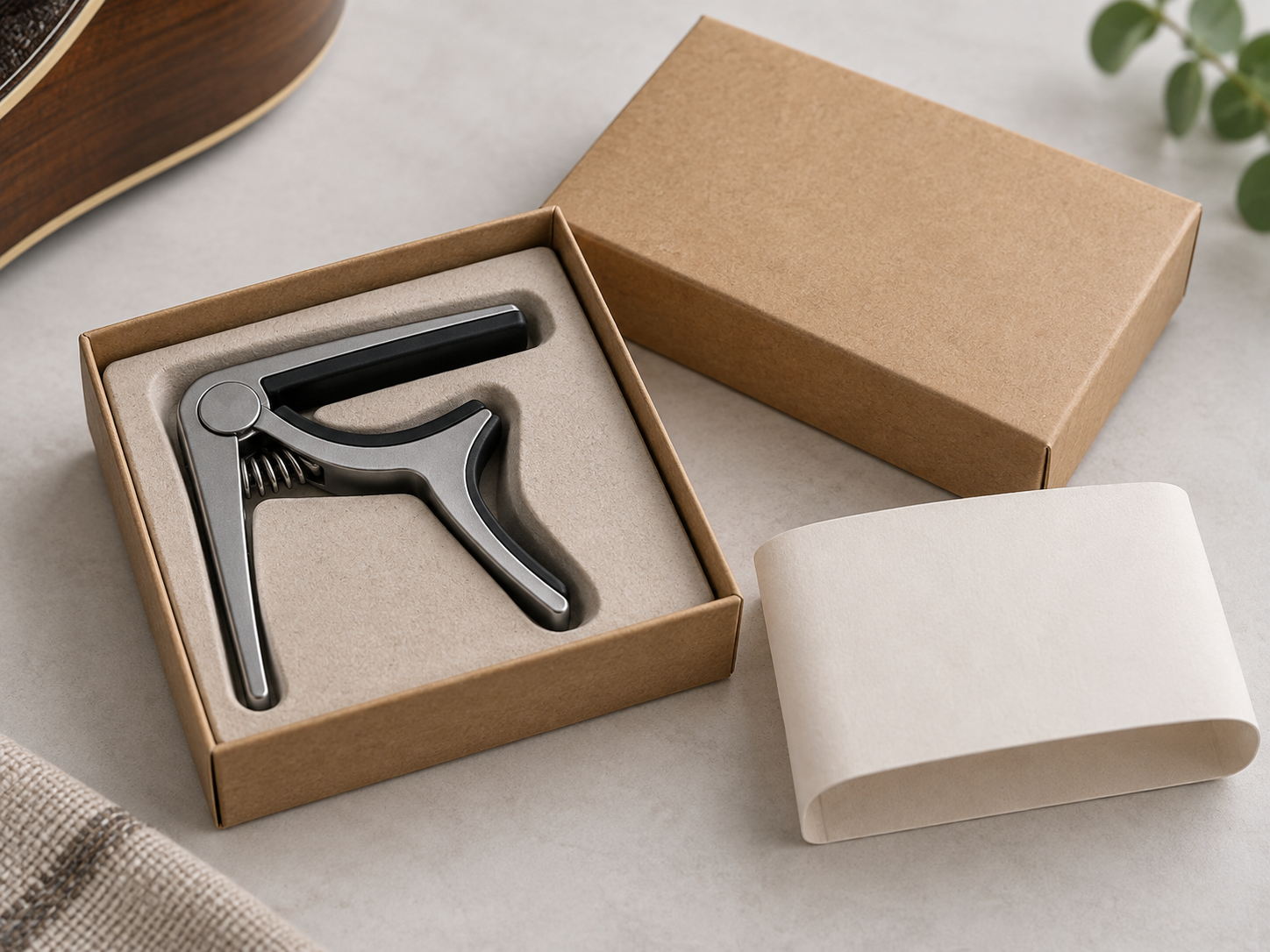
Use a consistent sample checklist
The buyer’s checklist should make a later comparison possible. Record the model, target guitar application, body and contact-surface condition, opening and closing action, visible finish, included feature, packaging and any point that requires follow-up. The checklist should state what was observed, not overstate a result. For example, it can say that the sample was reviewed on a named target instrument; it should not claim a universal compatibility or tuning result without an agreed test method and evidence.
If the buyer needs specific material, color, engraving, tension, neck-profile or instrument-type requirements, include them in the request rather than adding them after the quote. The supplier can then confirm whether that selected version is available for the project. This creates a cleaner basis for the quotation and avoids a product page being read as a blanket specification.
Ask questions that make quotations comparable
Ask each supplier to identify the configuration, supplied packaging, sample arrangement and commercial terms to which the quote applies. Ask whether the quote assumes a logo, a chosen finish, a retail box or another presentation choice. Ask what is included in the accessory set and whether the product must be reviewed again if any of those choices changes. A comparison table based on those answers is more actionable than a list of broad factory claims.
Prepare a supplier comparison
Use the same questions for every supplier: What is the exact model? Which guitar applications are confirmed? What is included? What sample will be reviewed? What packaging is being quoted? What documentation is needed for the destination? What commercial terms apply to this configuration? A direct, model-specific comparison is more useful than a broad claim about a “best” capo factory.
Match the product to the retail program
The right capo for a retail program depends on the instruments and customers the retailer serves. A shop selling mainly acoustic and electric guitars may look for a compact everyday accessory with a clear use case. A buyer developing a wider range may need more than one confirmed configuration. Confirm each proposed configuration against its intended customer and guitar application.
This is also where a buyer can decide whether an integrated feature adds value to the planned range. The SoundSentry product page for the Zinc Alloy Guitar Capo describes an integrated string-pin puller. A retailer can assess whether that supports its customer’s basic string-change routine and whether the feature should be explained in packaging or product information. The review remains product-specific: included features, dimensions and final presentation must match the approved version.
Review appearance, operation and protection together
Visual finish is not only an aesthetic issue. It can affect how the accessory fits beside the rest of a retail range, how a private-label program is presented and what the buyer expects from the packed product. Ask the supplier to identify the selected finish, color and visible material treatment in the quotation. Then compare the supplied sample with that record.
For operation, record whether the spring or hinge opens and closes normally, whether the contact pads are present and positioned as intended, and whether the capo can be fitted to the target instrument. Record the instrument, sample version, pad condition and any fitting or removal issue, then ask the supplier to explain unresolved observations. A check on one guitar does not establish compatibility with every neck or string set.
Keep packaging and instructions connected to the model
Plain bulk packing, branded retail packaging, a paper sleeve and printed instructions can create very different ordering conditions. If presentation is important to the project, give the supplier a short packaging brief: desired retail format, required information, language needs, pack count, barcode responsibility and target market. The supplier can then confirm the available project path and include it in a sample or quotation discussion.
Confirm logo placement, finish, color, packaging, sample quantity and order volume for the selected version before treating any option as part of the quotation.
Prepare for repeat orders
After a sample is accepted, file the approved configuration with the quote and packaging reference. On a repeat order, compare the intended model, finish, included feature, packaging, target market and document needs with the previous record. If any element changes, request confirmation before releasing the order. This simple habit is especially valuable when buying small accessories that look similar but may not share the same configuration.
Risks that belong in the buyer’s review
Buyers should not assume that a material name settles the selection. Two visually similar capos can differ in contact surfaces, mechanism, finish, included feature or packed configuration. A good review therefore uses a short list of observable points, a sample record and a model-specific quotation. This is more credible than making unsupported claims about universal compatibility, tuning stability or lowest pricing.
For branded projects, maintain one reference for the product and one for the presentation. The product reference identifies the selected version; the presentation reference identifies the agreed logo treatment, packaging and instruction needs. If either changes, ask whether a new sample or quotation review is needed. That process protects both the buyer and the supplier from avoidable expectations.
Supplier inquiry template
An inquiry can be short and still useful: target acoustic or electric guitar use; estimated quantity; target market; selected model or reference; sample need; requested branding or packaging; and any documents required for the market. It should invite the supplier to state what is confirmed, what needs technical review and what will be confirmed in the quotation.
Compare capo materials without oversimplifying
Material terms such as zinc alloy or aluminum can help a buyer identify a product family, but they do not establish overall quality by themselves. Construction, geometry, contact surfaces, spring or hinge behavior, finish and manufacturing consistency all contribute to the product a customer receives. Buyers should compare complete samples rather than assume that one material name automatically guarantees lighter weight, greater durability or a particular price.
For the current SoundSentry capo, zinc-alloy and rubber construction are confirmed on the product page. Any comparison with another material should be framed as a purchasing question: What is the exact construction? What differs in weight, finish, mechanism or packaging for the models being quoted? Which difference matters to the intended retail program? The answers must come from the selected samples and specifications.
Compare capo samples on the guitars your customers use
List the intended guitar models or neck and fingerboard shapes, string count and gauge, usual capo positions, and each capo’s model, version and pad condition. If an application beyond the stated acoustic/electric range matters, ask the supplier to confirm it for that specific version.
Start with one guitar and one string set. Record its tuning with the same tuner you will use for the comparison. Fit each sample at the agreed fret position using the same placement method, then record the reading for every string. Note any buzz, muted string, uneven pad contact or difficulty fitting and removing the capo. Repeat on other representative guitars; do not combine their observations into a single “universal fit” result.
If a result is unexpected, check placement first, then the contact pad and string condition. Repeat the observation before deciding whether the cause is the sample, its design for that neck, or the test setup. Send the sample ID and observations to the supplier for review. A single abnormal reading does not establish a defect across a production batch.
This procedure observes fit and tuning. It does not measure clamp force. A force claim would need a defined instrument, measurement point, method and unit, as well as results for the tested sample. Keep any acceptance limits in the buyer’s approved test plan rather than adding an unsupported universal threshold to the quotation.
Record the sample and decision
| Record field | Enter for each comparison |
|---|---|
| Sample and guitar | Guitar ID/type, neck or fingerboard details relevant to fit, string count and gauge, capo model/version, sample ID and pad condition |
| Test conditions | Date, reviewer, fret position, placement method, tuner or measurement method, and relevant environment notes |
| Before and after | Tuning before fitting; reading for each string after fitting; buzz, muting, contact and removal observations |
| Decision | Buyer-defined acceptance criterion, result, anomaly, adjustment, repeat-test result, reviewer and approver |
Leave measurement fields blank until a real test is performed. If readings are expressed in cents, document the tuner, reference pitch and comparison baseline. Keep photos of the contact area and packaging with the sample record when they help resolve a later question.
Design a sensible wholesale assortment
A retailer may not need many nearly identical capos. It may need a small range with distinct, confirmed purposes. One model might serve a core acoustic and electric program, while another would be considered only if a different instrument application is verified. The assortment decision should reflect customer demand, staff ability to explain the difference, available display space and repeat-order practicality.
For mixed accessory programs, the capo can also be considered alongside picks, cables, tuners or other relevant items. That does not mean every combination is available as a bundle. Ask which products can be ordered together, how each is packed and whether a combined retail or promotional configuration requires separate approval.
Prepare private-label artwork carefully
Before artwork is prepared, confirm the printable or markable area, permitted method, color limitations and file requirements for the selected version. The product and packaging may have different approval processes. A logo that works on a paper sleeve may not reproduce in the same way on a small metal surface.
Keep artwork factual. Do not place certification marks, compatibility claims, country-of-origin wording, warranty language or performance statements on a package unless the responsible parties have confirmed that the wording and documentation are appropriate. The supplier can provide product information, but the buyer remains responsible for approving the final market-facing presentation.
Compare quotations line by line
For each quote, record the exact model, quantity basis, sample terms, product finish, logo or branding scope, packaging, included features, delivery term and any other stated commercial condition. If a field is missing, mark it pending instead of filling it from another supplier’s quote or a general website statement.
Buyers sometimes ask for a low MOQ before defining the project. A more useful question is: What minimum quantity applies to this exact product, finish, branding and packaging configuration? A standard item and a custom retail program may have different conditions. The quotation, not the blog article, is the correct place to confirm the answer.
Send a comparable sample request
Give each supplier the same instrument and test brief: target guitars, neck or fingerboard considerations, strings, intended capo positions, desired model and any branded packaging. Ask which applications are confirmed for the proposed version and what sample will be supplied. Request a quotation that identifies the product, finish, included features, sample terms, packaging and quantity basis. Mark unanswered items as pending instead of assuming that a general product page confirms them.
For SoundSentry, start with the Zinc Alloy Guitar Capo and send the target guitar types, market, estimated quantity and sample or packaging requirements through the capo inquiry form. The selected configuration and available private-label options must be confirmed for the project.
Frequently asked questions
What affects guitar capo wholesale pricing?
Price depends on the selected model, quantity, material and finish, packaging, branding, included features and agreed commercial terms. Compare quotes only after those elements are aligned.
Can a branded capo project use custom packaging?
Packaging and branding can be discussed by project. Confirm the selected option, sample and quotation before presenting it as available.
What should be tested before approving a sample?
Test a named sample on representative guitars with a recorded string set, tuning method and capo position. Note each string’s before-and-after tuning, buzz or muting, pad contact and fitting/removal behavior. Compare the result with the buyer’s criteria, then record any retest or unresolved question before approving that version.
Conclusion
The best supplier choice is a match between a confirmed product configuration and the intended range—not a generic material or price comparison. View the live Guitar Capos category and Zinc Alloy Guitar Capo, then discuss branding and packaging requirements.
Plan Your OEM/ODM Project
Share your target product, market, estimated quantity, branding, packaging and certification requirements with the SoundSentry Technical Team.
View Related Products Request Product Information or a Quote