Private Label Guitar Capos: Branding, Packaging and Sample Approval
Plan a private-label guitar capo with a clear artwork brief, physical sample, packaging proof and batch acceptance checklist for B2B buyers.
Quick answer: A private-label capo program needs more than a logo file. Give the supplier a target guitar range, the selected capo construction, an approved artwork file, finish and color references, a packaging specification, and a sample acceptance sheet. Approve the physical capo and retail pack together. Confirm available options, sample quantity, production minimum and timing for the selected version before quoting; no single MOQ or finish rule applies to every project.
For a brand or distributor, the capo may be a low-ticket item, but it carries visible quality signals. An uneven logo, scuffed coating, crushed carton or clamp that pulls strings sharp can undermine the range. The safest brief separates decisions about the product, marking and pack so each can be checked independently.
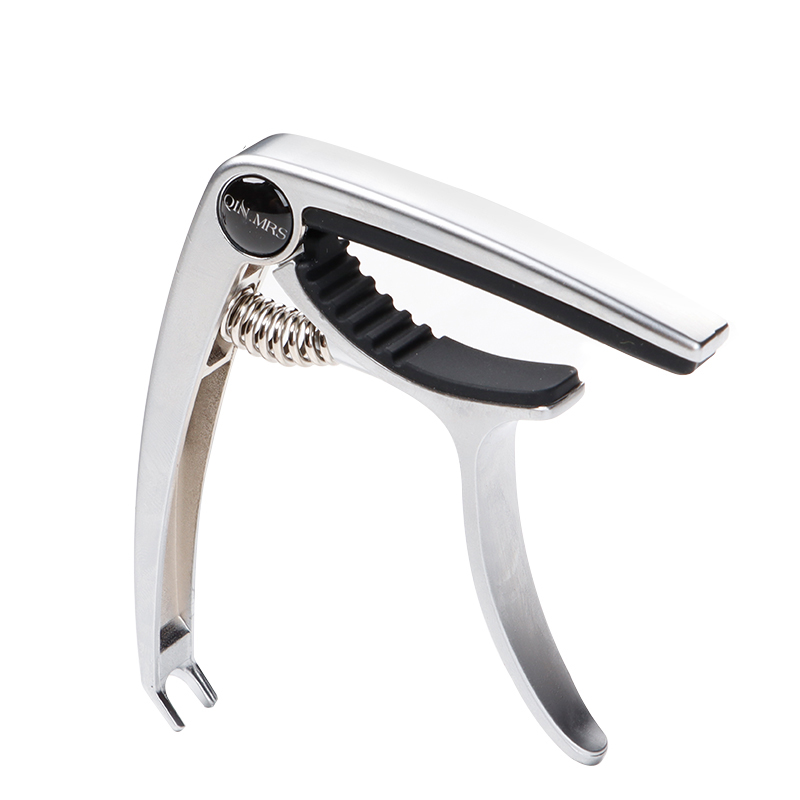
Actual catalog product photo. Logo, finish and packaging options depend on the reviewed project and approved sample.
Define the product before placing artwork
Start with the guitars and sales channel. State whether the range targets steel-string acoustic guitars, electric guitars or a defined mix. Record representative neck widths and fingerboard profiles; ask the supplier to test the selected capo on those instruments. Avoid claiming universal fit from a photograph. A clamp that clears one neck may mark or over-compress another.
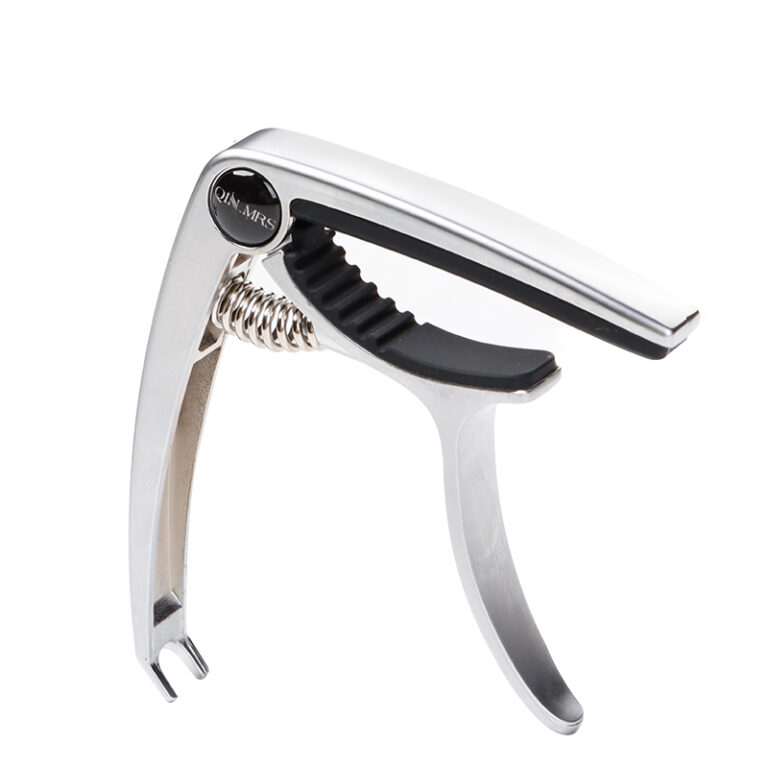
The SoundSentry zinc-alloy capo currently lists rubber contact surfaces and an integrated string-pin puller. These are useful details for a buyer brief, but available finishes, marking methods and pack options must be confirmed for the specific order. If the buyer requires a different mechanism, treat that as a separate product discussion rather than assuming the pictured version can be changed without tooling.
Before asking for a price, write down the chosen construction, contact-pad material, color, intended guitars, any bundle components and the retail or bulk pack format. Keep optional ideas apart from mandatory requirements. That helps the quotation show which version it covers.
Choose a marking location that can be inspected
Supply a vector logo where possible, with minimum clear space, color references, orientation and an approved visual proof. Ask for a marked physical sample under normal lighting. Check visibility in the product’s packaged orientation, not just a flat digital rendering.
Potential marking locations differ in usable area and wear exposure. A logo near a moving handle or rubber pad may be obscured or rubbed during use. Define the position in a dimensioned drawing or annotated product photo. Record a practical acceptance rule for alignment, edge quality, color and legibility. If the production method changes, reapprove the physical appearance rather than treating the logo file as the sole standard.
Avoid unverified claims such as “laser engraving is always more durable” or “screen printing is always cheaper.” Durability depends on the base finish, process and use. Ask for a method proposal and evaluate abrasion and cleaning on the actual sample.
Approve the pack as a separate component
Packaging should protect the capo, present it accurately and carry the information required by the destination market. Decide whether the order uses an individual retail card, box, pouch or bulk inner pack. State the unit count, dimensions, barcode location, language set, product name, color identification and any instruction leaflet. Have the buyer approve a physical packed sample or production-equivalent mock-up.
Do not put unverified warranty, material, origin or certification claims on the artwork. Confirm who owns the final files and how version changes are controlled. Packaging dimensions affect freight volume and shelf presentation, so quote comparisons should use the same pack specification.
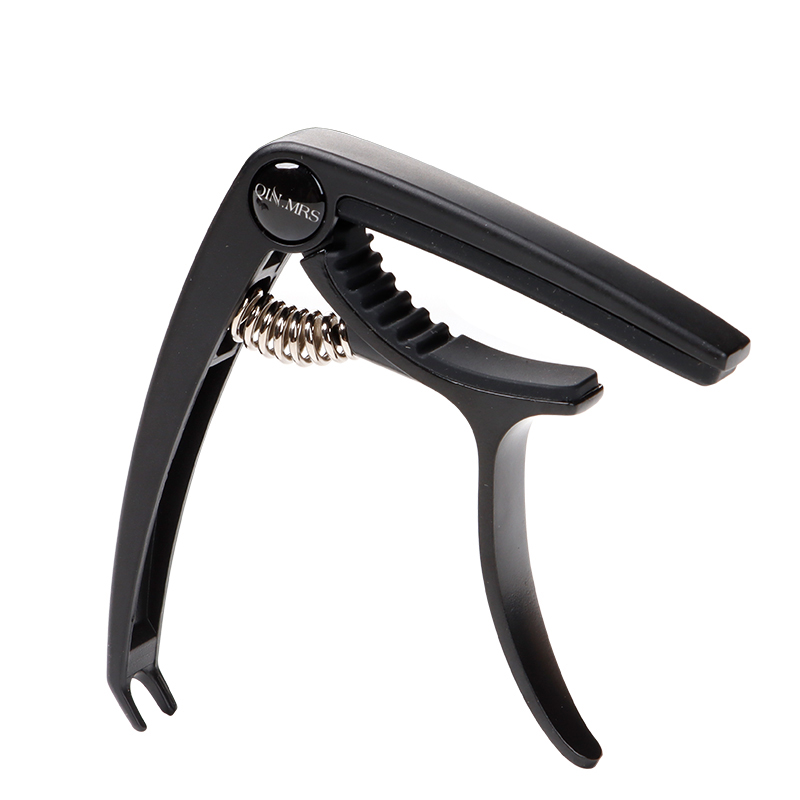
Actual catalog image. Inspect the production sample for the final branding position and contact surfaces.
Use one approval sheet for product and pack
| Item | Ask the supplier to show | Buyer acceptance record |
|---|---|---|
| Guitar fit | Sample on representative necks | Guitar models, fret positions and observations |
| Clamp behavior | Clear notes without excessive sharpness | Tuning and handling check on each test guitar |
| Surface finish | Actual color and coating | Signed sample or controlled color reference |
| Logo | Physical marked unit | Position, size, legibility and edge quality |
| Retail pack | Packed sample | Artwork version, barcode, fit and protection |
| Bulk carton | Carton and count proposal | Unit count, labels and transport test agreed |
The test should compare the capo with a known, freshly tuned reference guitar. Place it close behind the fret, play every string, and check both clear notes and tuning movement. StewMac’s capo guidance explains why excessive pressure can create tuning issues. A buyer can adapt that principle to an acceptance procedure without imposing one pressure number on every neck.
Compare quotations on identical scope
Request the unit price and the separate costs or conditions for logo setup, samples, packaging artwork, retail pack, inner cartons and any additional testing. Ask whether the minimum applies per logo, color or pack version. Record lead time separately for artwork approval, sample revision and production. Where a supplier proposes substitutions, ask for the affected sample and quotation to be revised.
An apparently lower unit price may omit the pack or use a different finish. A comparison table with the same quantity, artwork version and pack format prevents false savings. The capo supplier guide covers broader supplier selection; this article focuses on the private-label execution brief.
Keep the approved sample stable through production
Retain a signed product sample, packed sample, artwork PDF and revision log. At pilot stage, inspect units from different cartons for finish, logo alignment, pad attachment, spring or handle operation, and pack condition. Define what happens when a cosmetic defect is found: which area is judged, under what light, at what distance and against which approved sample.
Before a repeat order, reconfirm artwork version, component version, color, pack and label. A changed carton or pad can affect presentation or use even when the headline model name stays the same.
What to send in a capo RFQ
Send the target market, intended guitar types, estimated quantity, preferred product version, logo vector, marking location, finish/color reference, packaging dieline or example, barcode and language requirements, sample request and target delivery window. Attach a list of questions about what can be customized on the selected version. Contact SoundSentry with that brief to discuss available options and a sample plan.
Frequently asked questions
Can one capo be approved for acoustic and electric guitars?
It can be evaluated for both, but test the actual target necks. Width, profile and string setup affect fit and tuning behavior.
Is a digital logo mock-up enough for approval?
No. Use it to confirm placement, then approve a physical marked sample and the packed presentation.
Should the MOQ be stated on the product page?
Only when it has been confirmed for the selected version, color, marking method and packaging. Otherwise request a project-specific quotation.
What should be retained after approval?
Keep the signed product and pack samples, artwork revision, inspection method, quantity scope and any approved substitutions.
Conclusion
A reliable private-label capo launch is a controlled product-and-pack project. Define the guitars, approve the marking on a physical unit, test playability, and compare quotations with identical packaging scope. Then use the approved sample and artwork revision to guide the production lot.
Plan Your OEM/ODM Project
Share your target product, market, estimated quantity, branding, packaging and certification requirements with the SoundSentry Technical Team.
View Related Products Request Product Information or a Quote