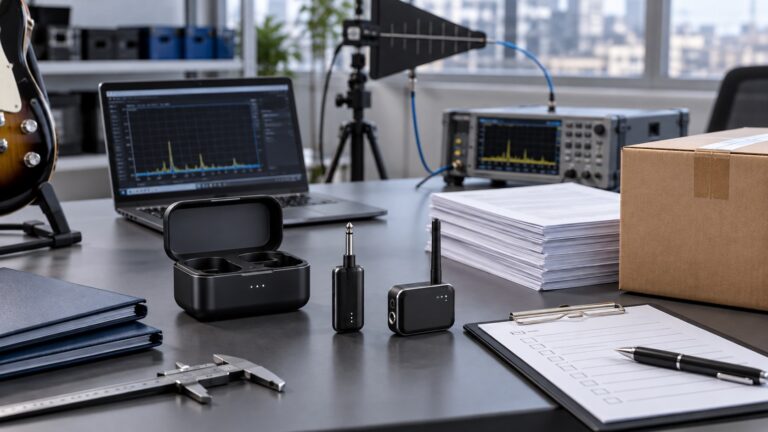
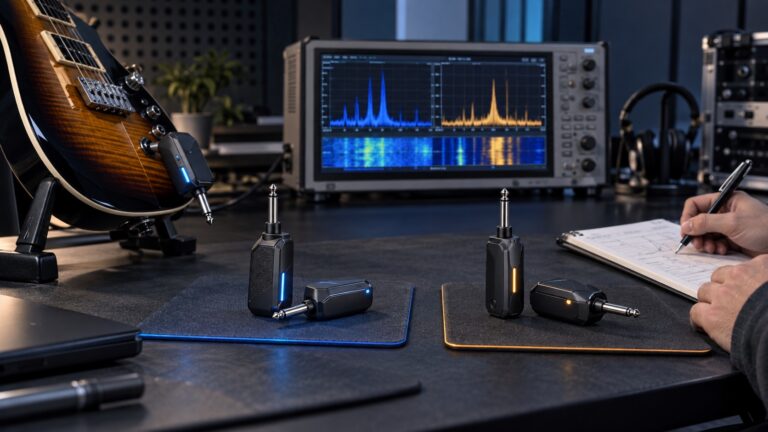
Testing Multiple QT-7 Wireless Guitar Systems on One Stage
Plan a practical multi-unit QT-7 wireless guitar trial: channel planning, interference observations, battery checks and approval records.
Quick answer: Before committing to a multi-player wireless order, test the proposed number of systems together in the actual venue. Record the channel plan, device positions, battery state, nearby wireless equipment and any audible interruption. A single transmitter–receiver demo cannot establish how a complete stage setup will behave.
Brands and distributors often evaluate a guitar wireless system one unit at a time. That is useful for initial handling, but a retailer’s demonstration area or live stage may have several players, wireless microphones, routers and audience devices. The aim of this trial is to identify an acceptable setup for the intended market—not to promise a universal system count or interference-free operation.
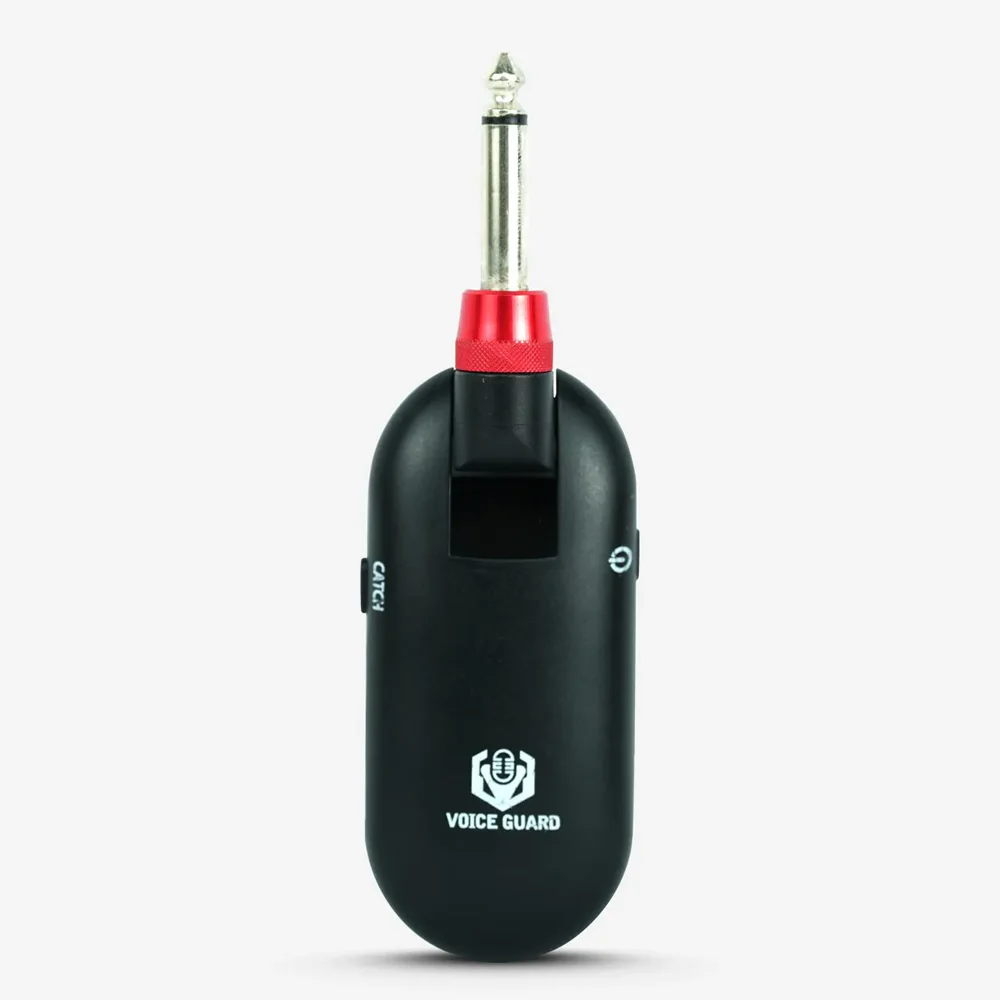
Actual QT-7 catalog image; request a physical sample of the version under evaluation.
Define the trial before choosing channels
List every wireless device expected nearby, the number of guitar or bass players, the approximate stage layout and the venue type. Identify the receiver output path and keep the same guitar, amplifier and gain settings when comparing wired and wireless operation. Check local frequency-use requirements and the supplier’s documentation for the precise model and destination market; do not infer regulatory suitability from a website image.
The QT-7 product page describes channel selection and a rechargeable system. Confirm the hardware revision, included accessories and channel instructions on the sample received. Catalog descriptions are not a substitute for a coordinated channel plan.
Run a repeatable multi-unit trial
Charge and label each sample. Pair and test each set separately first, then turn all intended systems on and play simultaneously. Move players through their normal positions and check at soundcheck and during a full-length rehearsal. Note the location and time of any dropout, noise or pairing problem. Repeat after other venue wireless devices are active. If an issue occurs, document the setup and change one factor at a time rather than assuming every interruption has the same cause.
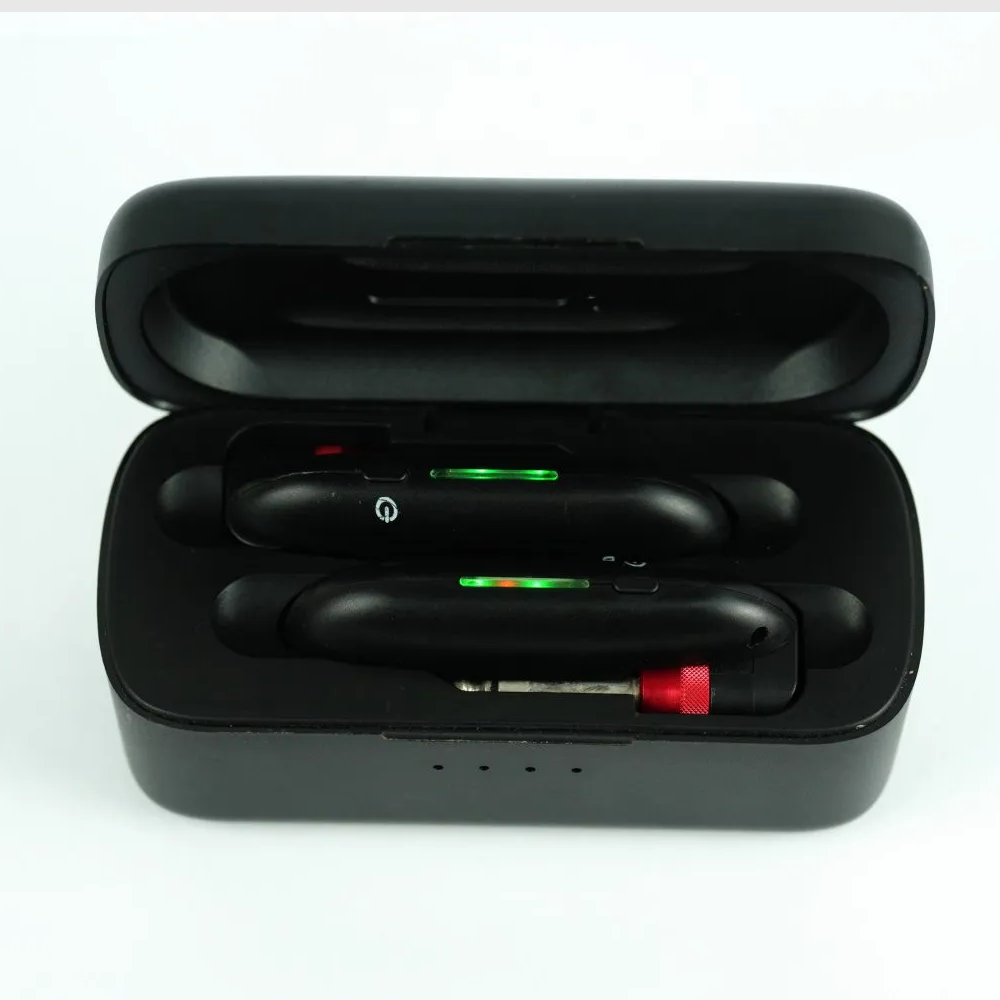
Use unit labels and a written log so observations can be traced to a particular sample.
| Test item | Record before the trial | Record after the trial |
|---|---|---|
| System count | Number of transmitter–receiver pairs | Pairs operated together |
| Channel plan | Assigned setting per pair | Changes and reason |
| Environment | Venue, nearby wireless devices | Interference observations |
| Power | Starting charge and charging method | End state and interruptions |
| Audio | Wired reference and output settings | Noise, level and dropout notes |
Turn results into an approval decision
Keep the approved sample IDs, software or hardware revision if supplied, channel plan and test log with the purchase file. A failed trial may call for a revised plan, a different venue test or a different product configuration; it should not be hidden by quoting only a best-case range. Ask the supplier which operating instructions and market documentation accompany the production version.
For an RFQ, send the target country, expected simultaneous system count, use setting, charging and packaging needs, branding scope and planned sample test. Contact SoundSentry to discuss a testable QT-7 sample brief.
Frequently asked questions
Does one successful pair test prove several systems will work together?
No. Simultaneous operation and the local wireless environment need their own test.
Can the website alone confirm that a frequency is usable in my market?
No. Check current local rules and the documentation for the exact supplied version.
What should the buyer retain after approval?
Keep sample IDs, the channel plan, venue conditions, observations and the approved configuration.
Plan Your OEM/ODM Project
Share your target product, market, estimated quantity, branding, packaging and certification requirements with the SoundSentry Technical Team.
View Related Products Request Product Information or a Quote