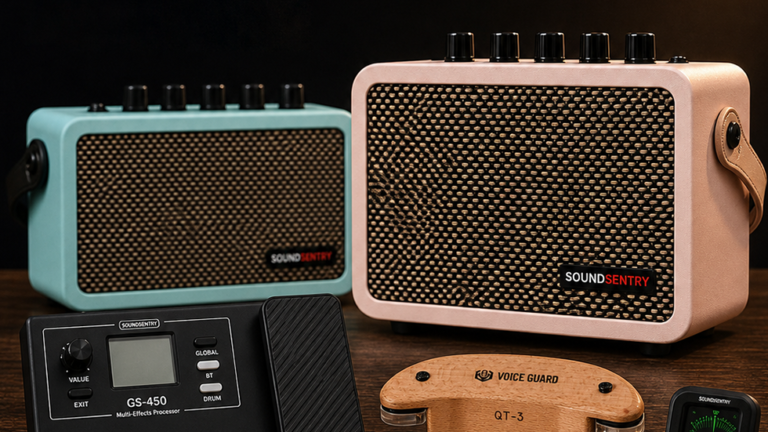
Put a small guitar amp next to a portable Bluetooth speaker and the two products may look surprisingly similar. Both can be rechargeable. Both may play music from a phone. Both may carry the same wattage on the specification sheet.
But once a guitar is plugged in, the similarity ends. A Bluetooth speaker is mainly asked to reproduce a finished recording. A guitar amplifier becomes part of the instrument. Its input stage, gain structure, equalization, power section, speaker and cabinet all influence what the player hears and how the guitar responds under the fingers.
This distinction matters during OEM sample approval. A sample can sound bright and impressive when it plays a polished demo track, yet feel harsh, flat or noisy when used with a real guitar. The reverse can also happen: an amp with a convincing guitar voice may not make a full-range music track sound like a consumer Hi-Fi speaker. That does not automatically make it a poor guitar amp.
Two products, two different jobs
A consumer speaker starts with music that has already been recorded, mixed and mastered. Its job is generally to reproduce that program with a balanced presentation and as little unwanted coloration as practical.
A guitar amp starts with a raw instrument signal. The sound still needs to be shaped. Some frequency areas may be emphasized to give the guitar presence; others may be controlled to prevent boominess or brittle highs. Clean headroom, gain transition and the way the speaker reacts to pick attack can matter more than a wide playback bandwidth.
For a buyer, this means the listening test cannot begin and end with Bluetooth music.
Start with the guitar input
Use a familiar guitar and cable, then keep them unchanged while comparing samples. Begin with controls at a repeatable reference position. Play single notes, open chords, palm-muted rhythm and a few hard-picked accents. These simple passages reveal more than a fast product demonstration.
Listen for practical questions:
- Do notes remain clear when several strings ring together?
- Does the attack feel immediate, or does the sound feel slow and compressed?
- Are low notes controlled, or do they make the cabinet sound loose?
- Does the upper range become tiring at normal practice volume?
- Is background noise acceptable when the player stops?
- Does the volume control rise smoothly enough for real use?
There is no single “correct” voice for every market. A beginner practice amp, a compact dealer bundle and a higher-gain rock product may need different choices. The important point is to define the intended player before approving the sound.
Wattage tells only part of the story
Buyers often compare amplifiers by wattage because it is easy to place in a catalogue. Wattage is useful, but it does not describe perceived loudness, clean headroom or tone by itself. Speaker efficiency, cabinet design, frequency balance and limiter behaviour can change how two amps with the same stated power perform in a room.
During sample evaluation, test at low, medium and realistically high settings. A portable model should still be controllable at desk volume, while its sound should remain stable when the player turns it up. Listen for sudden harshness, pumping, cabinet noise or a volume control that becomes difficult to manage.
Bluetooth playback and guitar tone are separate jobs
On a practice amp, Bluetooth is usually there for backing tracks, lessons or reference music. It should be checked, but it should not replace the instrument test.
Pair the intended phone, reconnect it after switching power off and on, and play the backing track while the guitar is active. Check whether the two signals remain intelligible together. The guitar should not disappear behind the music, and the combined level should not produce obvious clipping at a normal setting.
Also confirm how the controls interact. Buyers should know whether Bluetooth level is adjusted on the phone, on the amp or by both. This small operating detail often affects customer questions later.
The cabinet and speaker reveal themselves at real volume
Cabinet material and speaker size are not just lines on a specification sheet. They work together with the amplifier circuit. During testing, listen close to the product and from normal playing distance. Check for grille vibration, loose hardware, port noise and rattles that appear only on certain notes.
Do not approve consistency from one especially good unit. Compare several samples with the same guitar, control settings and audio track. Differences in noise, output level, control feel or cabinet resonance should be recorded before the golden sample is signed off.
Effects must be usable, not merely listed
Clean, overdrive, reverb, chorus and other functions can strengthen a portable amp’s retail story, but only if their operating range makes sense. Test the transition from clean to overdrive. Turn each effect from minimum to maximum and identify the settings a player is likely to use.
A long feature list is less valuable than a smaller group of functions that can be demonstrated clearly, repeated across production and explained in the manual.
A repeatable listening routine for sample approval
- Use the same guitar, cable, pick and reference phrases for every sample.
- Photograph or record the control positions before testing.
- Check low, medium and practical high-volume behaviour.
- Evaluate clean tone before adding gain or effects.
- Test Bluetooth alone and together with the guitar signal.
- Check headphone, recording and rechargeable-power functions when included.
- Compare more than one unit and document any difference.
This routine does not replace electrical, safety or durability testing. It gives the buyer a consistent way to judge the part of the product that a specification sheet cannot fully describe: how the amp behaves in use.
What to define in an OEM brief
“Make it sound good” is not a workable sound target. Before quotation and sampling, give the supplier a clearer brief:
- Target player, retail position and main use environment
- Preferred clean headroom and general sound direction
- Required gain modes and effects
- Speaker, cabinet, size and weight priorities
- Bluetooth, headphone, recording and charging requirements
- Control labels, logo, colour, accessories and packaging
- Destination market and required compliance documentation
A better brief shortens sample discussions and makes approval less subjective.
Continue the evaluation
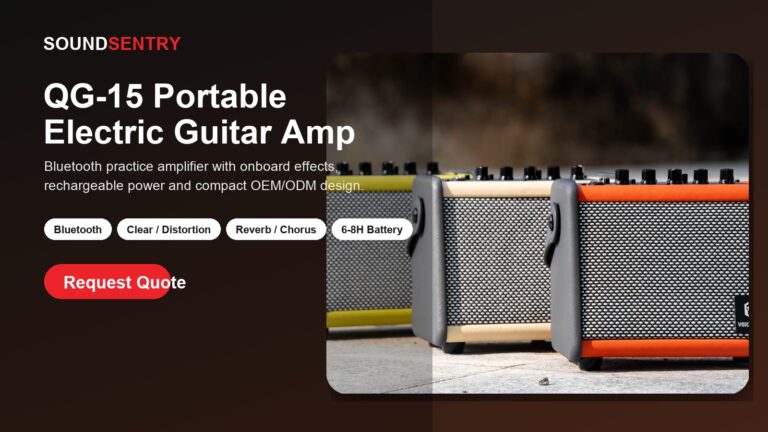
For a model-specific example, review the QG-15 portable electric guitar amplifier and the BlackNote10 10W portable guitar amplifier. Buyers preparing a test plan can also use our portable guitar amp sample approval checklist and guitar amplifier quality control checklist.
If you are comparing samples for a private-label or OEM/ODM project, send SoundSentry Music your target market, required functions and sample priorities. We can review the available model and configuration options with you.
Plan Your OEM/ODM Project
Share your target product, market, estimated quantity, branding, packaging and certification requirements with the SoundSentry Technical Team.
View Related Products Request Product Information or a Quote