How Distributors Evaluate Multi-Effects Processors Before a Bulk Order
Use this B2B checklist to compare multi-effects pedal functions, samples, connectivity, packaging and documentation before ordering.
A multi-effects processor can serve practice, recording, learning, live use or a mixture of those roles. Before ordering in volume, distributors should define the intended customer and channel, then evaluate a selected configuration through a practical player workflow. A feature list alone is not an approval plan.
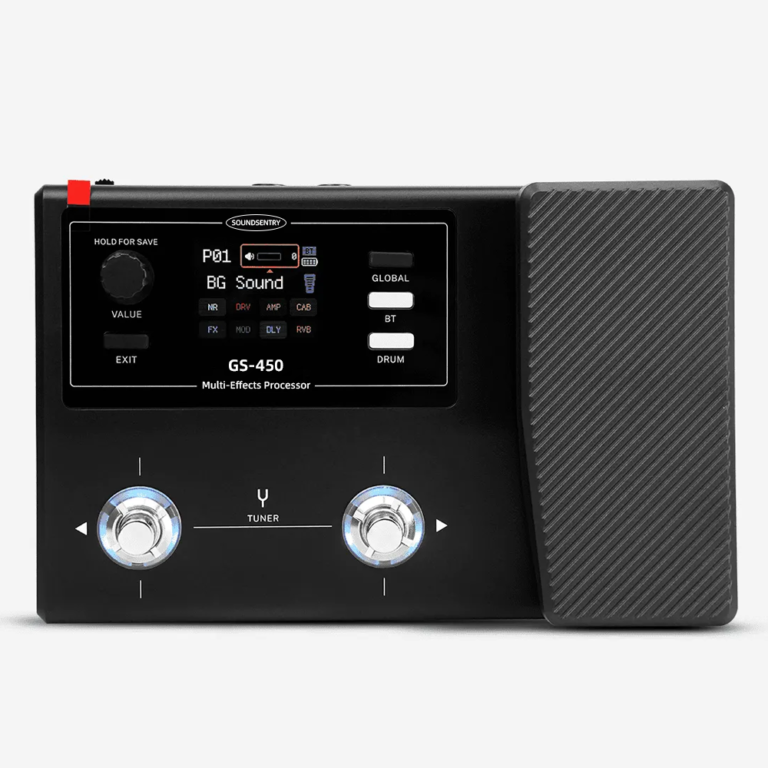
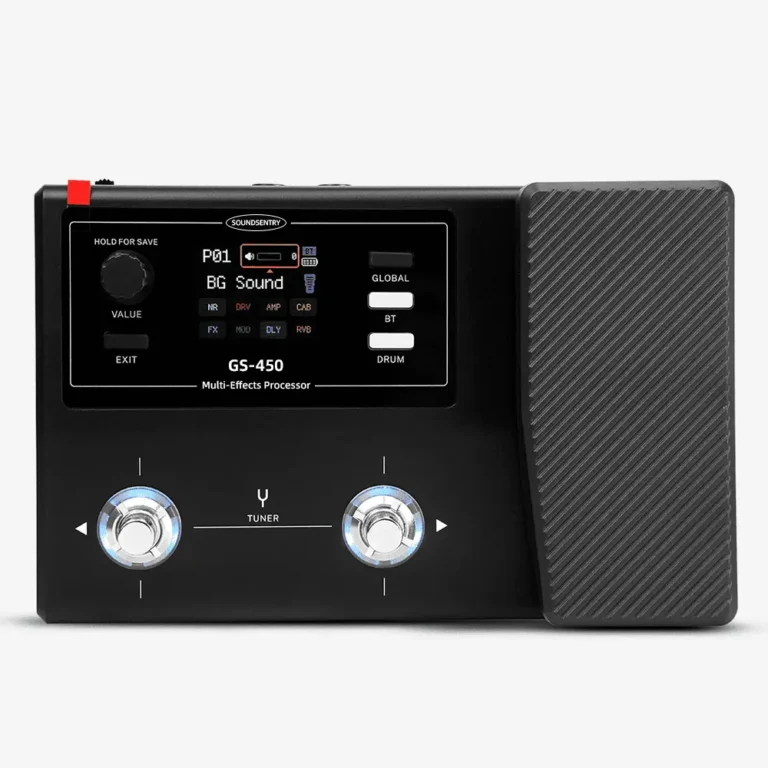
The GS-450 listed by SoundSentry is one example of a compact multi-effects product. Its current product page lists third-party IR loading, eight effects modules, mobile-app control, Bluetooth backing-track playback, stereo headphone monitoring, OTG recording, preset storage and a drum machine. Those features are model-specific. Buyers should confirm the current configuration, documentation and quotation for the exact version they are evaluating.
Define the retail role first
Start with the intended user. A practice-focused product may need a clear headphone and backing-track workflow. A recording-oriented buyer may prioritise connection and recording behaviour. A retailer may need a concise feature story and a simple demonstration path. Write that role down before comparing products, because it determines which functions must be tested in the sample.
Turn specifications into a feature matrix
List the functions that matter to the chosen channel: effects and preset workflow, cabinet or IR loading where applicable, controls, footswitch operation, app workflow, Bluetooth, recording, monitoring, power and included accessories. The purpose is not to claim that every unit has every function. It is to identify the selected configuration that will be quoted and approved.
Test the complete user workflow
During sample evaluation, review representative presets and volume consistency, then test controls and footswitches. Confirm the functions that are relevant to the selected model, such as IR loading, Bluetooth, app interaction and recording. Check physical connections, power or charging arrangement, accessories and packaging against the same sample record.
Evaluate a model through the intended customer journey
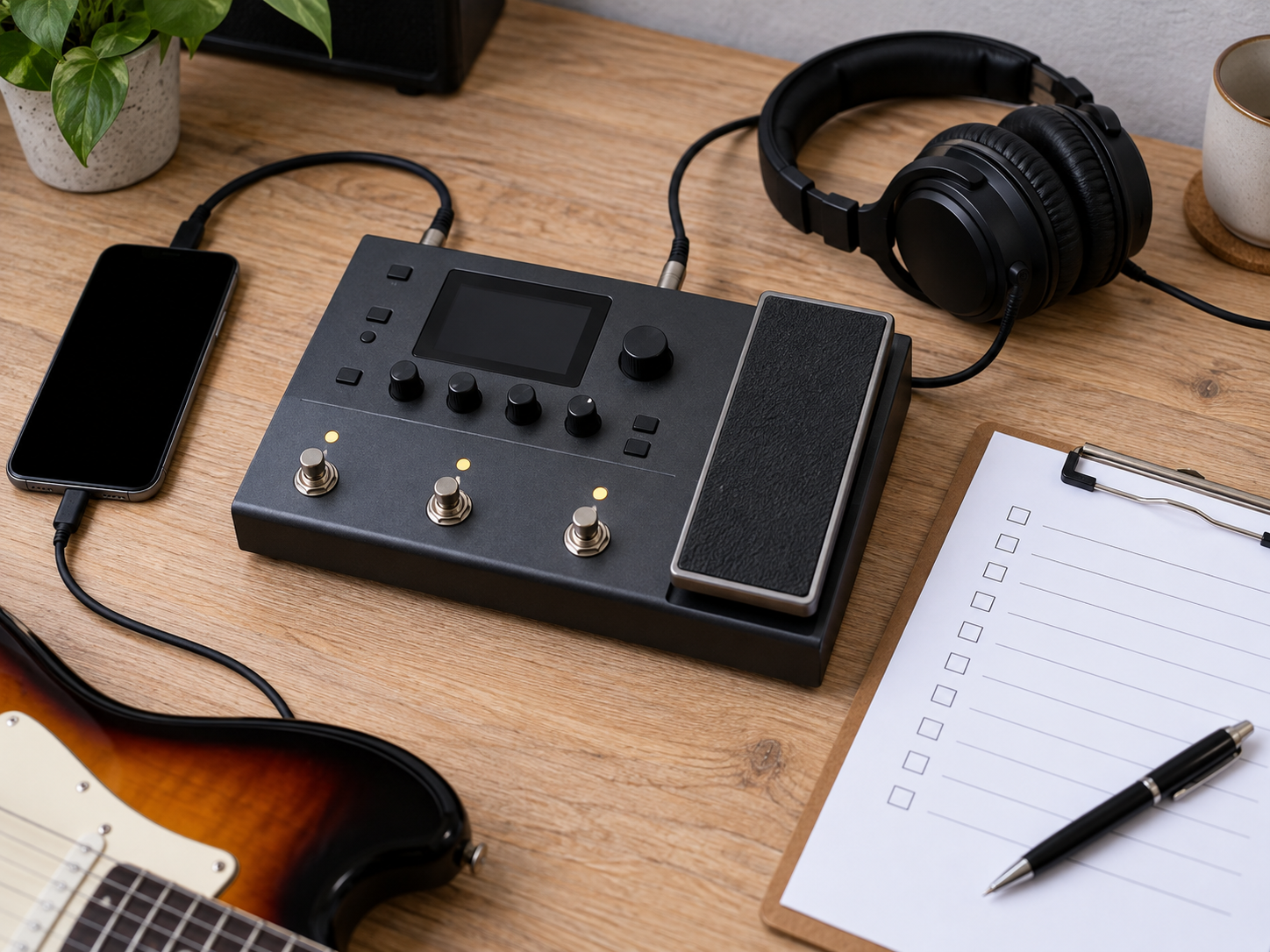
An effective sample review follows the way the end user is expected to meet the product. For a store demonstration, a buyer may begin with power-on, a small number of representative presets, basic control changes and headphone monitoring. For a product intended to be used with an app or backing track, the reviewer may include the relevant wireless or app workflow in the agreed check. For recording-oriented use, the selected connection and recording path should be checked against the exact model documentation.
The point is not to make a long test sequence for its own sake. It is to confirm the parts of the experience that support the planned retail message. A purchasing team should write down the configuration used for the review, the accessories connected and any item that needs a supplier response. This gives product, sales and purchasing teams a shared reference before they discuss quantity and delivery.
Separate model facts from category language
Multi-effects pedals vary widely. A feature described on one unit does not prove that another unit has the same connection, battery, preset count, app experience or documentation. For the GS-450, the current live page provides model-specific information, including listed 24-bit conversion, 44.1 kHz sampling, 50 factory and 50 user presets, a 6.35 mm input, headphone/output connection, USB-C and a rechargeable battery. If these details are used in an article, they should be cited as GS-450-specific and rechecked before publication.
Broader category language should focus on the buyer’s process: define the target player, select the model, review the sample, confirm the configuration and then request a quotation. This avoids both overclaiming and shallow keyword repetition.
Build a configuration sheet before requesting terms
The configuration sheet can include the exact model, required functions, connections, power method, included accessories, target market, packaging, instruction needs, brand presentation and required documents. Include the intended quantity and whether a representative sample has been reviewed. This lets the supplier identify which elements are fixed and which remain open for the project.
Commercial terms should be requested against that sheet. MOQ, production schedule, shipping plan, warranty or after-sales arrangements and documentation availability may change with quantity, branding, packaging and destination. They should be confirmed in a model-specific quotation, not copied from an earlier inquiry or another product page.
Request the GS-450 Specification Sheet
Share your target market, estimated quantity, requested functions and packaging needs via SoundSentry Contact Us.
Keep packaging and documentation in the approval record
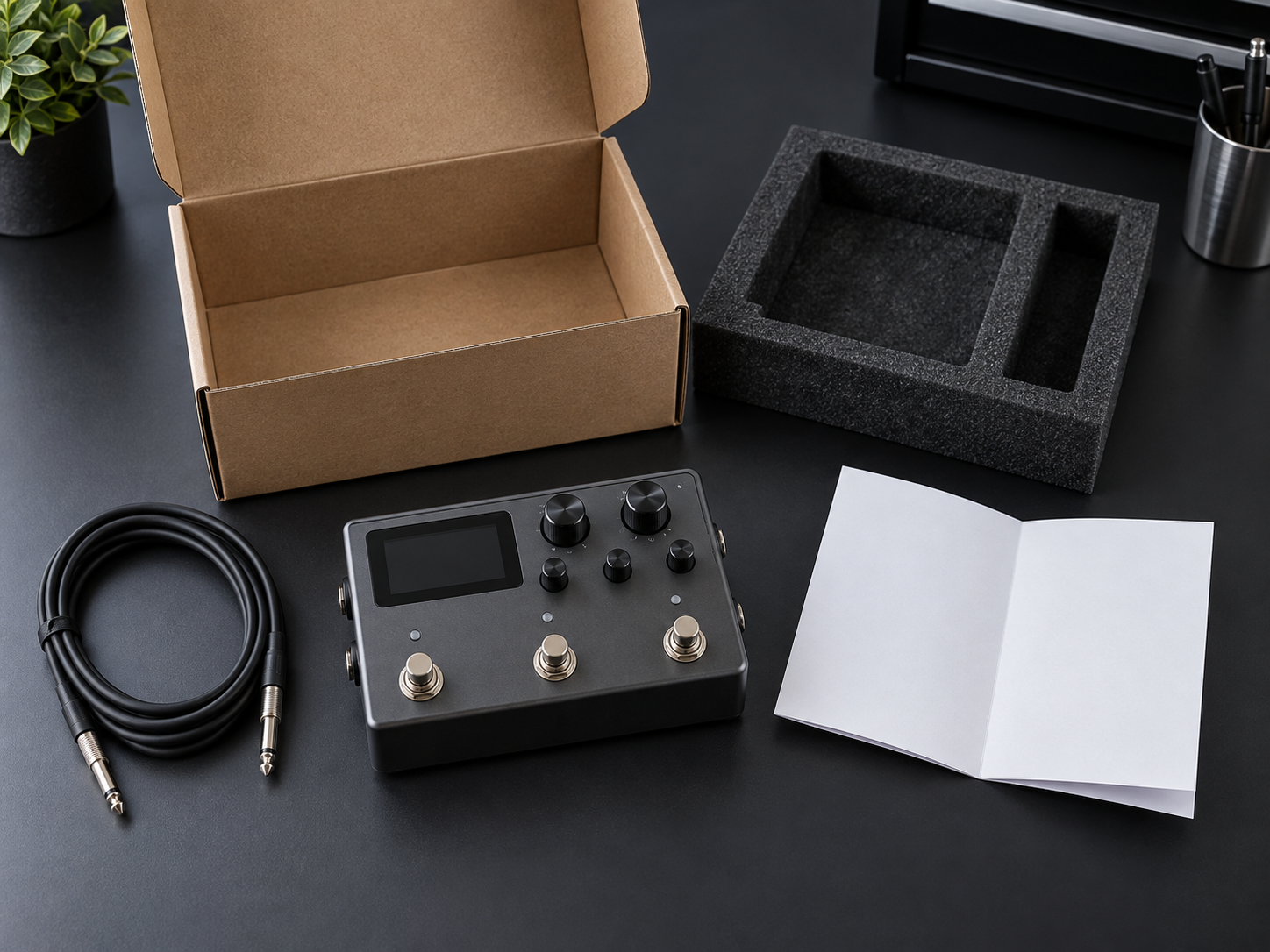
The product, accessories, packaging and instructions should be reviewed as a single configuration. For an electronic product, target-market documentation and certification applicability must be confirmed for the selected model and destination. Do not assume that a general statement about certifications or an earlier sample applies unchanged to every configuration or market.
Plan handover from sample to bulk order
Before bulk-order planning, collect the approved sample record, configuration sheet, packaging reference, quotation and any required documentation request in one file. If a function, label, instruction, power arrangement or accessory changes, review whether the sample approval still applies. This reduces the risk of a product team approving one version while purchasing orders another.
The live GS-450 page also directs buyers to a model-level sample approval checklist and an OEM product-line guide. Those pages can support a detailed project conversation; they should not be treated as a substitute for confirming the exact selected configuration with the quotation.
Risks to control before launch
An electronic music product needs a clearer approval record than a generic feature list. Buyers should control differences between sample and order, function and marketing language, target market and documentation, and quoted product versus packed accessories. A product may be suitable for a specific use case without being the right fit for every retail channel. The article should describe the decision framework and let the quotation confirm the product-specific answer.
Avoid presenting model figures as category standards. If the article references GS-450 functions or technical figures, label them as current model-page information and check them again before publication. If the buyer needs a function, connection, accessory, certification document or schedule, it should appear on the configuration sheet and be confirmed for the selected model.
Supplier inquiry template
A distributor can request a meaningful evaluation by sharing target market, intended customer, estimated quantity, requested functions, required connections, accessory and packaging needs, branding requirements, requested documents and sample plan. This gives the supplier a direct basis for a model-specific response rather than an ambiguous request for the “best” multi-effects pedal.
Build a channel-specific feature matrix
The same feature can have different commercial value in different channels. A music retailer may want a demonstration that staff can complete quickly. An online seller may need clear product media, a precise connection list and concise setup information. An education-focused reseller may care about a repeatable practice workflow, while a brand may place more emphasis on presentation and product-line positioning.
Create a matrix with the required use cases in rows and the selected model’s confirmed functions in columns. Mark each intersection as essential, useful or not required. This prevents a long feature list from controlling the decision. A function that does not support the planned customer journey may add explanation or support work without improving the offer.
Tone and preset workflow
Review how a user selects, edits and stores sounds on the chosen model. For GS-450, the current page lists eight effects modules, 50 factory presets and 50 user presets. These figures should be verified on the live page and specification sheet at publication or quotation time. The sample review should focus on whether the workflow suits the intended user, not on declaring subjective tone superiority.
IR, app and Bluetooth workflow
If third-party IR loading, app control or Bluetooth backing-track playback is part of the retail proposition, test the exact workflow that will be described to customers. Confirm required devices, connections and supported steps from the model documentation. Keep app screenshots, compatibility wording and software-version claims out of public content unless they are current and approved.
Recording and monitoring
For a model promoted for quiet practice or recording, review the specified headphone/output and recording path. The GS-450 page lists stereo headphone monitoring and mobile OTG recording. A distributor should confirm the accessories, connection method and target-device requirements for the selected configuration before converting these features into packaging or sales claims.
Run a structured sample session
Begin with a physical inventory: product, power or charging accessories, cables, printed material and packaging. Record the sample identifier and visible condition. Next, follow the agreed power-on and connection steps. Test only the functions relevant to the intended retail role, but complete those workflows from beginning to end.
Use representative presets at a controlled monitoring level. Check control response, footswitch operation and preset changes. If app, Bluetooth, IR or recording functions are required, document the device and method used for the review. Finally, inspect packaging and reset the unit as required for the next reviewer. Record observations as specific facts rather than broad judgements.
An issue log should identify the step, expected behavior, observed behavior and evidence available. This gives the supplier a question that can be investigated. Statements such as “Bluetooth bad” or “tone inconsistent” are too vague for an engineering or purchasing response.
Review specifications in context
Technical figures matter when they connect to an application or compatibility question. The current GS-450 page lists 24-bit conversion, a 44.1 kHz sampling rate, a 1-megohm input, a stereo unbalanced headphone/output connection, USB-C, physical dimensions, weight and battery information. These are model-page facts, not universal requirements for a good multi-effects processor.
Before publication, compare any cited number with the current specification source. Before purchase, ask the supplier to confirm the selected configuration and resolve any difference between a web page, manual, sample label and quotation. When a figure does not affect the buyer’s decision, it may be clearer to link to the specification page than to overload the guide.
Prepare packaging and customer-support information
Electronic products need instructions that match the delivered configuration. Review product naming, control labels, connection diagrams, charging or power information, included items and basic setup steps. If an app or external file workflow is involved, determine what support information the end user will receive and who will maintain it.
Private-label packaging should be reviewed separately from the product function. Confirm logo placement, color, labels, instructions and carton presentation for the chosen project. Do not add certification marks, performance superlatives or compatibility promises without the corresponding approval and evidence.
Confirm destination-market requirements
Certification and compliance needs depend on the exact electronic product and destination. The GS-450 page states that CE and CCC/3C documentation is available for electronic products while also directing buyers to confirm exact model and destination applicability. The article must preserve that qualification.
The buyer’s inquiry should identify the sales market and the documents required by its compliance process. The supplier can then confirm what documentation is available for the selected model. A blog post is educational content; it is not a certificate, declaration or legal determination for a shipment.
Evaluate total launch readiness
Before approving a bulk order, ask whether product, documentation, packaging, training and after-sales information are aligned. A technically functional sample can still be difficult to launch if the product name, included accessories, instructions or marketing claims describe different configurations.
Use a launch-readiness table with five areas: approved product sample, confirmed specification, approved presentation, required documentation and commercial terms. Each area should have an owner and status. Release the project only when open issues are understood and the responsible team has accepted the remaining conditions.
Plan repeat orders and version control
On a repeat order, compare the new quotation with the approved reference. Check model identifier, hardware or software version where relevant, functions, accessories, packaging and documentation. Ask whether any component, workflow or presentation detail has changed. If it has, determine whether a new sample or targeted re-evaluation is needed.
Version control is particularly important when an app, firmware or external-file workflow forms part of the user experience. The buyer does not need to expose internal development details in a blog post, but it should know which delivered version its public instructions describe.
Common distributor mistakes
One mistake is selecting a unit by feature count without deciding who will buy it. Another is testing interesting functions but failing to record the sample configuration. A third is writing product copy before connections, accessories and workflows are confirmed. Finally, some buyers compare MOQ and schedule across materially different packaging or branding projects.
The remedy is consistent: define the channel, select the configuration, test the relevant workflows, approve the presentation and request commercial terms against the same record. That process creates a stronger buying decision and more trustworthy public content.
Convert the approved sample into an order
The bulk quotation should point to the same selected functions, connections, power arrangement, accessories, branding, packaging, quantity and documentation requirements that were approved in the sample review. Confirm MOQ, production timing, warranty or support terms in the quotation; these are project-specific commercial details.
For a deeper model-level approval process, read SoundSentry’s Multi-Effects Pedal Sample Approval Checklist and OEM Product Line Guide.
Frequently asked questions
Which functions should a distributor check first?
Check the features connected to the intended customer workflow, then verify the exact configuration, controls, connections and supplied accessories for the selected model.
Can a private-label project change packaging or presentation?
Logo, color, labels, instructions, packaging and selected functions can be discussed by project. Availability requires configuration-level confirmation.
When should documentation be requested?
Request it before committing to a destination-market launch or bulk order. The applicable documents must be confirmed for the exact model and market.
Conclusion
Distributors make better bulk-order decisions when they evaluate a complete, documented configuration rather than isolated features. View the GS-450 product page, review SoundSentry’s quality-control approach and request a sample or OEM quote.
Plan Your OEM/ODM Project
Share your target product, market, estimated quantity, branding, packaging and certification requirements with the SoundSentry Technical Team.
View Related Products Request Product Information or a Quote