Guitar Pickup Compatibility Before a Bulk Order: A Buyer and Production Checklist
A B2B checklist for confirming guitar pickup fit, mounting, controls, power, wiring and sample approval before a production or wholesale order.
Pickup compatibility is not a single yes-or-no specification. A product can produce sound on one guitar and still be unsuitable for a production program because the mounting area, string clearance, cable route, control layout, power arrangement or accessory set does not match the intended instruments. For a guitar brand, distributor or repair-channel buyer, the safest process is to define the installation envelope and approve representative samples before bulk ordering.
This guide covers acoustic sound-hole pickups, onboard preamp systems and other pickup categories at a purchasing-process level. It does not assume that one pickup fits every instrument. Exact dimensions, wiring, electronics, installation work and market documentation must be confirmed for the selected model and guitar platform.
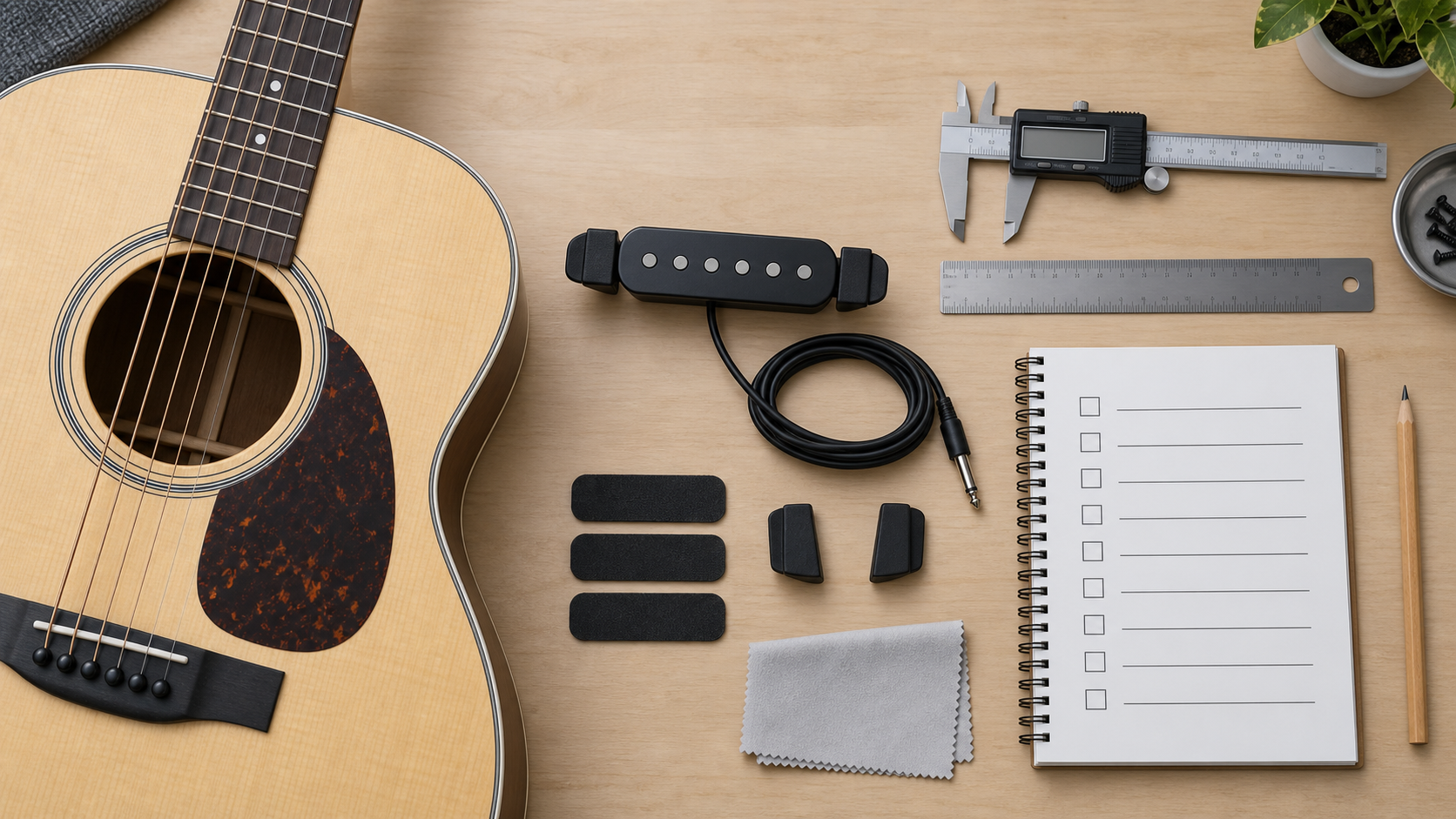
Editorial illustration: pickup compatibility starts with the instrument, mounting space and recorded measurements.
Define the instrument population
Begin with the guitars that the pickup must serve. A factory may have one controlled body design, while a retailer may need a replacement product for many customer instruments. List the guitar type, body size, sound-hole or cavity dimensions, top construction, string type, expected output connection and any existing electronics.
Do not use only a model-family name. Production tolerances, trim, bracing, finish thickness and hardware can affect available space. If the program covers several guitars, identify a representative sample set and the limits the pickup must accommodate.
Identify the pickup architecture
Different pickup formats create different compatibility questions. A sound-hole magnetic pickup needs suitable sound-hole access, secure contact and adequate clearance. An undersaddle piezo system depends on saddle-slot and installation conditions. An onboard preamp requires a defined control opening, internal space, cable routing, battery access and output-jack arrangement.
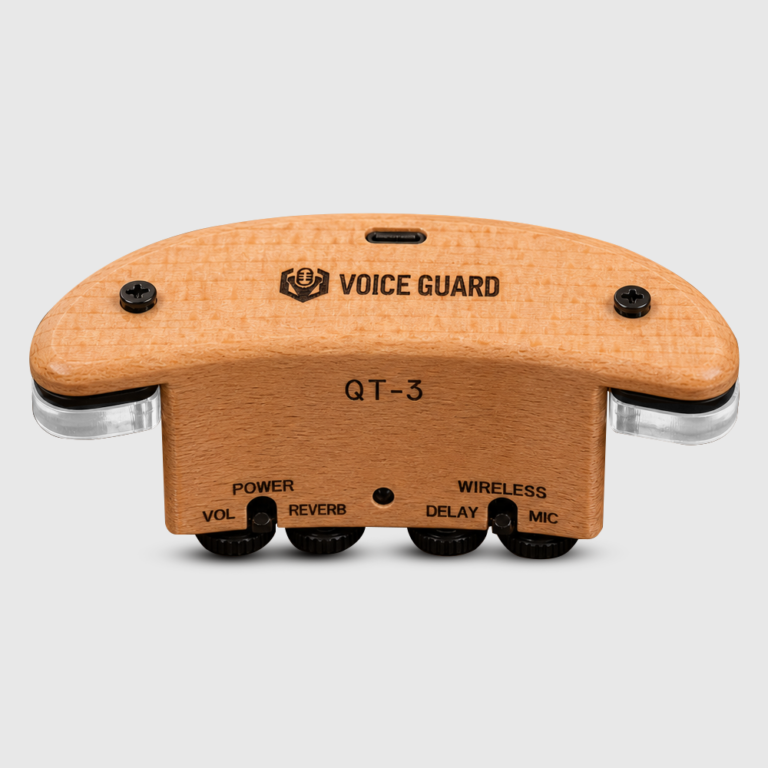
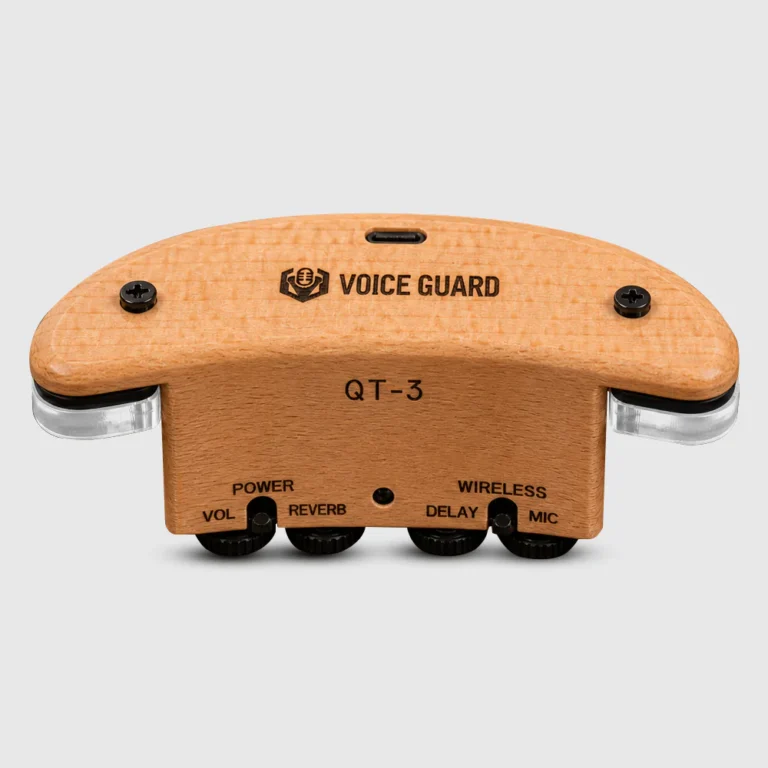
An effects-equipped sound-hole pickup adds controls, charging and daily operating behavior. SoundSentry's current QT-3 sound-hole pickup combines sound-hole mounting with onboard effects, Bluetooth playback and USB-C rechargeable operation. Those functions are model-specific; buyers should confirm fit and operation on the intended guitars.
Build an installation envelope
An installation envelope is a drawing or table that defines the space the product may occupy. Include the relevant width, depth, thickness, clearance and contact locations. For removable products, show the range of sound-hole dimensions or mounting surfaces that will be tested. For built-in products, show cutout dimensions, corner radii, wall thickness and internal obstructions.
Use controlled drawings when possible and state the unit of measurement. A reference photo helps orientation but should not replace dimensions. Identify which values are nominal, which are permitted ranges and which are inspection points on the finished guitar.
Check string and playing clearance
A pickup should not interfere with strings, normal pick movement or access to adjacent controls. Review string-to-pickup clearance at practical setup conditions and check whether the mounting system can shift during playing. For sound-hole products, evaluate both the product body and any knobs, switches or charging connectors.
The correct clearance depends on the guitar, setup and pickup design. Record the actual test setup rather than publishing a universal figure. If a compatibility claim will be used in a catalog, base it on the tested instrument range and state limits clearly.
Review mounting contact and finish protection
Mounting parts must hold the product without damaging the instrument under intended use. Examine contact surfaces, pressure points, protective pads, screw travel and the possibility of loosening. On finished instruments, check whether installation and removal leave marks under normal approved use.
For a production program, confirm the mounting method in work instructions. For a retail replacement product, provide clear installation guidance and limitations. A phrase such as "easy to install" should not replace the actual steps or compatibility information a customer needs.
Discuss a Pickup Compatibility Sample
Send the guitar type, relevant dimensions, required functions, quantity and packaging needs to SoundSentry through Contact Us.
Confirm cable routing and output connection
Map the signal path from the pickup to the output. Check connector type, cable length, strain relief, internal routing, external cable position and access for assembly or service. Built-in systems may require an endpin jack or another output arrangement. Removable systems should not place the cable where it interferes with playing or creates unnecessary stress.
If the product includes adapters or cables, list them in the approved accessory set. Confirm whether the supplied connector matches the destination channel and whether replacement parts are available by quotation. Avoid assuming that a visually similar cable has the same wiring or mechanical strength.
Define wiring information for production pickups
For electric guitar or bass pickup projects, compatibility may include string count, string spacing, pickup dimensions, mounting ears, screw spacing, magnet orientation, conductor count and switching plan. Active systems add power and control requirements. The buyer should provide or approve a wiring diagram for the exact configuration.
Terms such as single coil, humbucker, active, passive or coil split describe broad design categories. They do not establish connector pinout, color code or installation compatibility. Confirm the supplier's wire-color definition and test the complete circuit with the intended pots, switches, output and power arrangement.
Check power, charging and battery access
Active electronics and effects-equipped pickups need a power plan. Confirm battery type or rechargeable arrangement, charging connector, status indication, operating controls and access for service. Evaluate how the product behaves during low power, charging and reconnection.
Battery duration depends on use conditions. Define the test state, effect use, Bluetooth activity, output level and other relevant conditions before comparing samples. Do not turn one informal test into a universal operating-time promise.
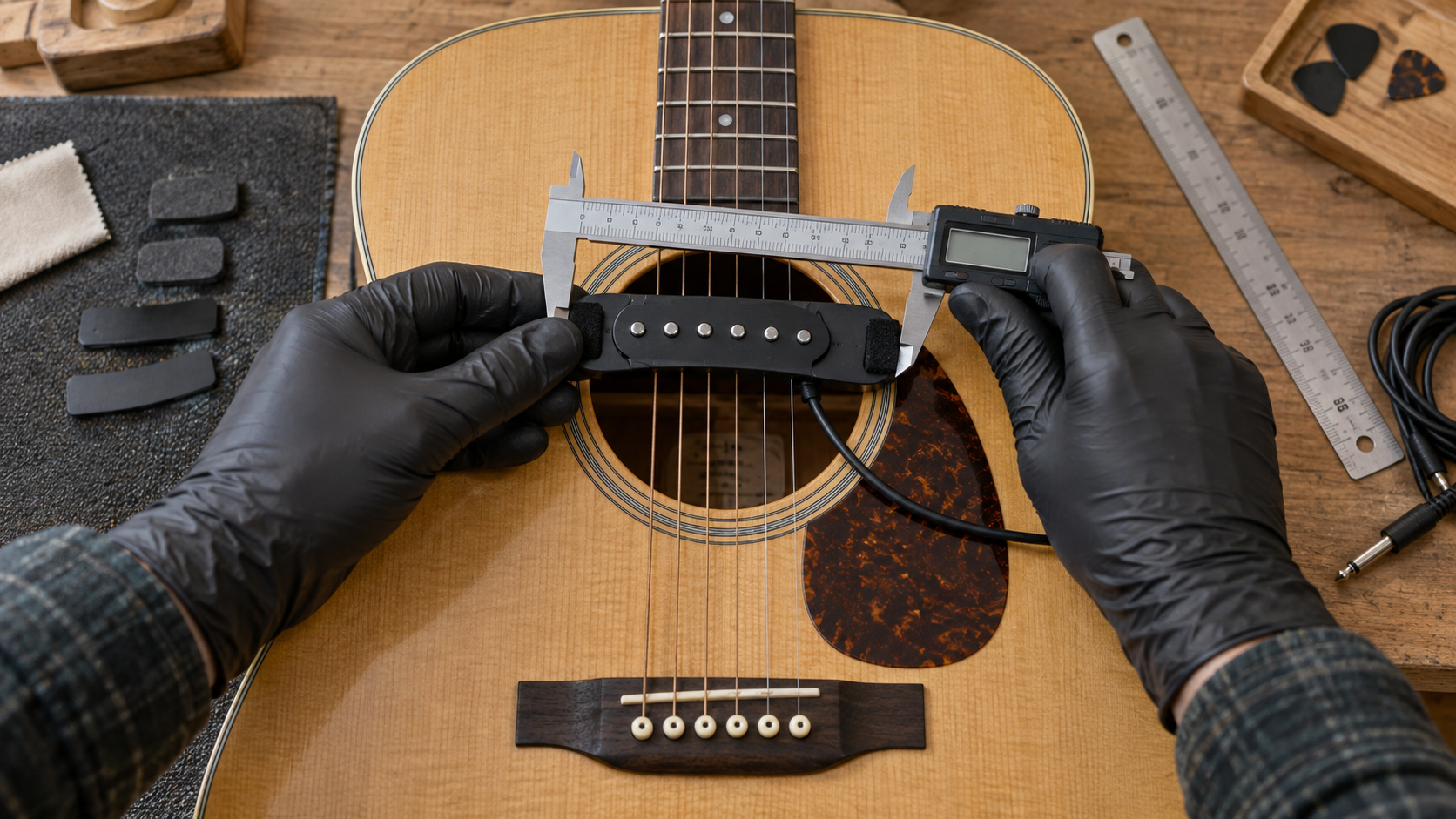
Editorial illustration: representative guitars should be checked for fit, clearance and mounting contact.
Evaluate output and noise in a controlled chain
Use the same guitar, cable, amplifier or interface, gain settings and listening position when comparing pickup samples. Record the signal chain. Check output level, background noise, handling noise, control range and any switching behavior relevant to the model.
The purpose is consistency and application fit, not an unsupported claim that one design has universally better tone. Acoustic results depend on the instrument, installation, room and signal chain. For a production project, compare samples against an approved reference and agreed acceptance criteria.
Test onboard effects as operating functions
If the pickup includes reverb, delay, chorus or another effect, test the full control range and the transition between dry and effected signals. Check knob direction, switch behavior, startup state and whether settings can be explained clearly in the user instructions.
For products with Bluetooth backing-track playback, confirm pairing, reconnection, playback level and interaction with the pickup signal. The approved sample should define the operating logic that the buyer expects in production and in sales materials.
Create a representative sample matrix
A single guitar cannot prove compatibility with a broad market. Build a sample matrix using instruments that represent the intended range. Include the smallest and largest relevant mounting conditions, different top shapes or finishes, and any guitar family that has a distinct internal obstruction or control arrangement.
Record pass, conditional pass or fail for each instrument and test point. A conditional pass must state the condition, such as a permitted dimension range or required installation step. This matrix becomes the basis for accurate product descriptions and reduces unsupported universal-fit language.
Connect the sample to the production configuration
Assign an identifier to the approved pickup sample and retain its drawings, function list, accessories, artwork and packaging record. If the mounting part, enclosure, control layout, electronics or cable changes, decide whether a new compatibility test is required.
The existing sound-hole pickup sample approval checklist provides related review points. A buyer should add the exact guitar matrix, measurements and acceptance conditions for the current project.
Run a pilot installation before a full production release
For a guitar-production project, a pilot installation connects the pickup drawing to the real assembly process. Use production-representative bodies, hardware, controls and tools. Record installation time only as an internal observation under the defined conditions, not as a universal promise.
Watch for steps that depend on operator judgment: positioning a contact point, routing a cable around bracing, tightening a mounting part, fitting a battery holder or aligning an onboard control panel. If the result changes between operators, improve the fixture, drawing or work instruction before scaling the order.
Inspect the guitar again after strings are installed and the normal setup is completed. Confirm mechanical clearance, control access, output connection and noise in the finished signal chain. A pickup that passes a bench test may still require a different cable route or installation sequence in the complete instrument.
Control drawings, wiring and product revisions
Give each approved drawing and wiring diagram a revision identifier. The purchase order should reference the current revision and the approved sample. If a wire color, connector, mounting part, control board or enclosure changes, require a written comparison and decide which tests must be repeated.
Change control is particularly important when the buyer sells replacement products. A small dimensional revision can change the published fit range, installation instructions or accessory list. Sales and support teams need the same current information as production and purchasing.
Keep superseded documents for traceability, but clearly mark them as obsolete. A shared folder without revision status can cause a factory, supplier or content team to use the wrong drawing. The active record should show who approved the change, when it applies and whether existing inventory uses the earlier configuration.
Prepare an RFQ that suppliers can answer
An effective RFQ should include:
- Target guitar type and intended customer or production use.
- Installation format and controlled dimensions.
- String count, spacing or sound-hole range where relevant.
- Required controls, effects, Bluetooth or charging functions.
- Output connection, cable and accessory requirements.
- Branding, finish, instruction and packaging scope.
- Sample quantity and representative guitars for evaluation.
- Estimated order quantity, destination and required documentation.
Ask the supplier to identify any item that remains subject to sample confirmation. This makes the quotation more useful than a generic statement that the product is compatible with acoustic or electric guitars.
Inspect incoming or pre-shipment units
Inspection should compare the shipment with the approved configuration. Check model identification, visible dimensions where practical, mounting parts, cable or connector set, controls, charging accessories, labels and packaging. Functional sampling should use the agreed signal chain and representative guitar fixture or test instrument.
The sampling method and acceptance limits depend on the product and order. Define them with the supplier and any inspection provider before shipment. An editorial checklist is not a substitute for an agreed inspection plan.
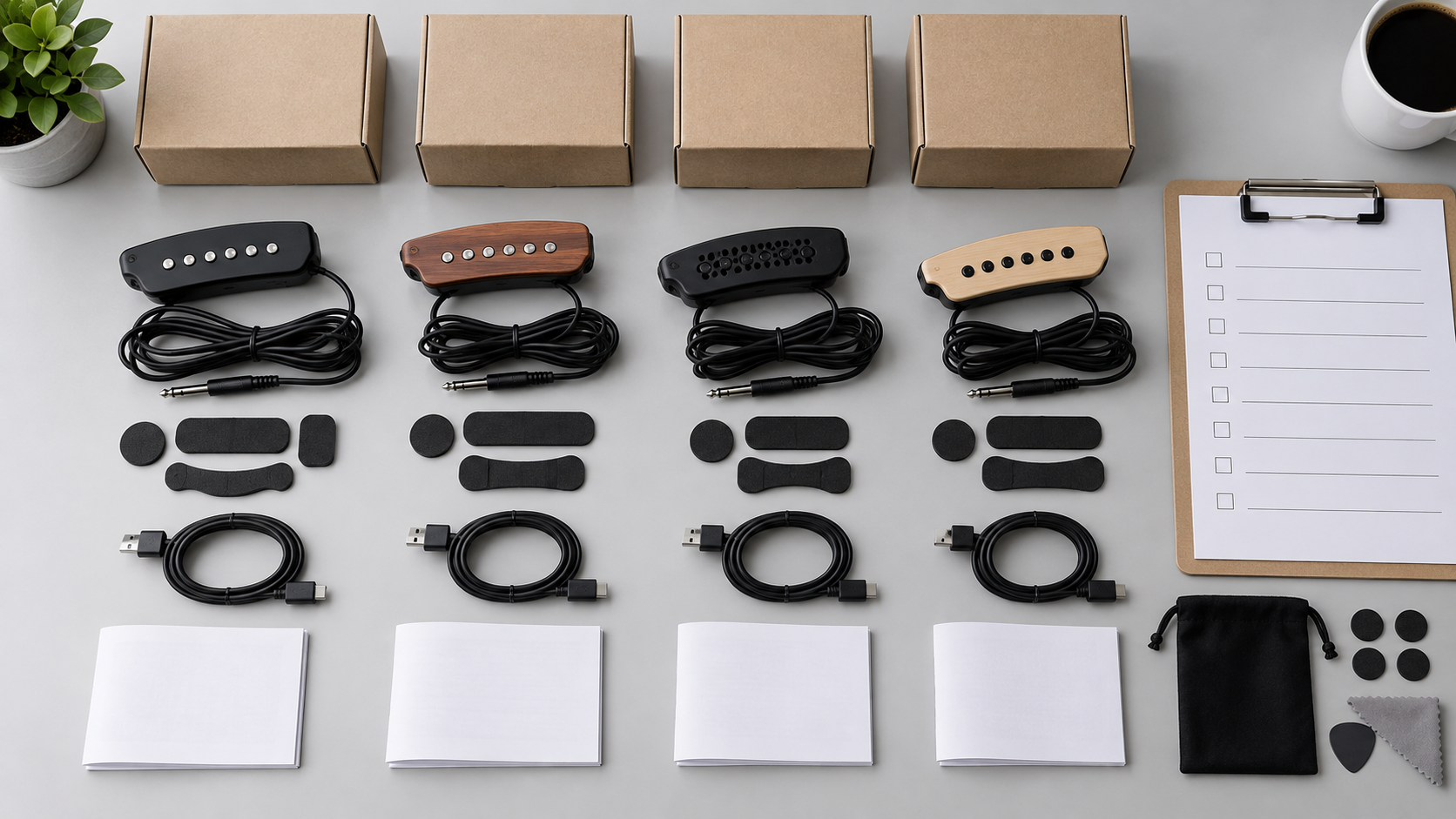
Editorial illustration: confirm the pickup, mounting parts, cables, charging accessories and packaging as one kit.
Plan instructions and after-sales support
Compatibility information must reach the end user. Instructions should identify the intended instrument type, installation steps, charging or battery operation, control functions and situations that require professional installation. Include clear warnings where incorrect installation can damage the product or instrument.
For distributors and retailers, define the information needed to handle fit questions, missing accessories or confirmed defects. Ask how replacement mounting parts, cables or charging accessories are handled. These terms should be confirmed in the commercial quotation.
Turn compatibility evidence into accurate product content
Product pages should separate confirmed fit information from general use ideas. State the pickup architecture, intended instrument type, measured mounting range and included parts. Explain whether installation is removable or requires guitar modification. If professional installation is recommended for a built-in system, say so clearly.
Use the representative guitar matrix to support compatibility wording, but do not publish internal pass/fail records as universal proof. A concise table of supported conditions is often more useful to customers than a long list of guitar brand names. Include clear photographs or diagrams that show orientation, contact points, controls and cable routing for the approved product.
For AI search and support teams, answer direct questions consistently: what type of guitar is intended, which dimensions must be checked, what accessories are included, how power is supplied and which steps require confirmation. Update the product page, manual and sales sheet together when the configuration changes.
Avoid broad compatibility claims
Claims such as "fits all guitars" are difficult to support because instruments vary. Use a tested range, listed instrument type or conditional wording based on measurements. Separate mechanical fit from electrical operation and from customer preference.
Likewise, do not infer compatibility from brand names alone. Product revisions and guitar variations can change dimensions or electronics. The strongest evidence is the approved drawing, representative instrument matrix and recorded sample result.
Frequently asked questions
What dimensions should a buyer send to a pickup supplier?
Send the mounting opening or sound-hole range, available depth, wall or top thickness, clearance around strings and controls, screw or contact positions, and any internal obstructions relevant to the selected design.
Does a sound-hole pickup fit every acoustic guitar?
No universal assumption is safe. Sound-hole size, top shape, bracing, finish, string clearance and mounting design can differ. Test representative instruments and publish the supported range.
What wiring information is needed for an OEM pickup?
Confirm conductor count, supplier wire-color definition, coil or circuit arrangement, controls, pots, switching, output connection and any power requirement for the exact model.
How should compatibility be inspected before shipment?
Compare the units with the approved sample and drawings, check mounting parts and accessories, and test a defined sample using the agreed guitar fixture, signal chain and acceptance criteria.
Conclusion
Pickup compatibility combines mechanical fit, signal path, controls, power, accessories and installation information. Buyers who define an installation envelope and test representative guitars can order with clearer evidence and write more accurate product descriptions. Review the QT-3 sound-hole pickup as a current product example, then send your guitar and project requirements for model-specific evaluation.
Plan Your OEM/ODM Project
Share your target product, market, estimated quantity, branding, packaging and certification requirements with the SoundSentry Technical Team.
View Related Products Request Product Information or a Quote